Praslin travel guide: what to prioritize on the island
Praslin rewards travelers who plan around a few clear priorities rather than trying to cover every attraction. The island is Seychelles’ second-largest island, with settlements around Baie Sainte Anne, Anse Volbert, and Grand’ Anse, famous beaches including Anse Lazio and Anse Georgette, and a major nature area centered on the Vallée de Mai. It is also a practical base for exploring nearby islands, although each excursion adds transportation, timing, and weather considerations.
A strong Praslin itinerary balances beach time with forest exploration, a look at the island’s layered history, and enough flexibility to respond to daily conditions. That balance matters because the most enjoyable version of the trip is not necessarily the one with the most scheduled activities. It is the one that leaves time for the shoreline, viewpoints, marine encounters, and unhurried meals that often become the strongest memories.
This guide focuses on practical decisions rather than fixed prices or timetables. Flight and ferry schedules, transfer arrangements, admission requirements, and operating conditions can change, so confirm current details directly with providers before booking. Use the recommendations here as a planning framework that can be adjusted for the length of your stay, the interests of your group, and the island you want to experience beyond the beach.
- Start with your main interest: beaches, nature, history, or nearby-island day trips.
- Choose one primary base: staying in a different part of Praslin can simplify some days and complicate others.
- Protect the first day: a calm arrival day prevents delays from consuming precious activity time.
- Limit the number of excursions: one nearby island can be enough to add variety without turning the trip into a transport schedule.
- Verify details early: confirm current transport, entry rules, accessibility, weather guidance, and reservations separately.
| Planning priority | Main places or features to consider | Best time to plan it |
|---|---|---|
| Choose a convenient base | Baie Sainte Anne, Anse Volbert, or Grand’ Anse | Before booking accommodation |
| Spend time at the coast | Anse Lazio, Anse Georgette, and other beaches selected during your visit | Build around weather and energy levels |
| Explore tropical habitat | Vallée de Mai and the island’s protected landscapes | Allow a substantial half-day |
| Add island variety | Curieuse, La Digue, Cousin, Cousine, or Aride | After confirming current transport |
| Learn the island’s story | The island’s naming, settlement history, and natural heritage | Fit into a slower cultural day |
Choosing a base around Praslin’s main settlements
The location of your accommodation influences more than the view from the room. It affects how you begin the day, the amount of time spent in transit, and which activities feel effortless. Praslin’s main settlements are Baie Sainte Anne, Anse Volbert, and Grand’ Anse. Each provides a reasonable base, but the best choice depends on whether your priority is immediate beach access, proximity to particular attractions, or a quieter atmosphere.
Baie Sainte Anne is one of the island’s central visitor areas. Because it is among the principal settlements, it is a practical place to begin comparing excursions and local arrangements. It also works well for travelers who want easy access to services and a less complicated first day. The trade-off may be a busier atmosphere than travelers seeking isolation prefer.
Anse Volbert offers a different balance for many visitors. The name is associated with one of the island’s recognizable coastal areas, making it a natural choice for beach-focused itineraries. Travelers based here can plan beach days with less deliberate movement, then arrange separate outings for the Vallée de Mai or another island. Before booking, check the exact position of the property rather than assuming every option near the settlement offers the same access or atmosphere.
Grand’ Anse is another principal settlement and may suit travelers who want to experience a different part of the island’s shoreline. A stay here can make some coastal days feel more integrated into the visit rather than like a series of day-trip excursions. At the same time, allow more transport planning if your priority attractions are concentrated elsewhere.
Compare bases by function, not by a vague idea of which settlement is “best.” The following framework keeps the decision tied to your actual itinerary:
- Beach-first travelers: prioritize a property within practical walking distance of the coast you want to use.
- Nature-first travelers: compare transfer times to the Vallée de Mai and leave room for a full, unhurried visit.
- First-time visitors: consider a base with straightforward arrival arrangements and easy access to several activities.
- Couples or slower travelers: balance atmosphere against convenience; the most peaceful property may require more planning for meals and excursions.
- Families or mixed-interest groups: choose a base that reduces daily travel and sits near more than one suitable activity.
| Question to ask | Why the answer matters | How to verify |
|---|---|---|
| Which beach can I reach on foot? | It affects how freely you can change plans during hot or wet parts of the day. | Review the property map and ask the accommodation provider. |
| How long does a transfer to the Vallée de Mai take? | Short journeys leave more time for the preserve itself. | Ask about current door-to-door timing rather than estimating from a map. |
| Where are meals and evening activities available? | A beautiful room can be less convenient if every dinner requires a long ride. | Check dining areas, operating days, and transport options. |
| Does the property fit mobility needs? | Beach access, terrain, and transport points can affect daily mobility. | Request specific details on paths, steps, vehicles, and accessible activities. |
| Is a quieter setting worth additional travel? | Isolation may improve rest while consuming time you wanted for sightseeing. | Compare two realistic daily schedules based on your planned activities. |
Choosing between Anse Lazio, Anse Georgette, and other beaches
Praslin is associated with attractive coastal scenery, but the best beach depends on what you want from the day. Some visitors want a familiar, well-known destination that has become part of the island’s identity. Others prefer to spend the entire day near their accommodation, moving between the shoreline and a nearby restaurant or lodge. Deciding this before arrival prevents beach hopping from turning into unnecessary transport.
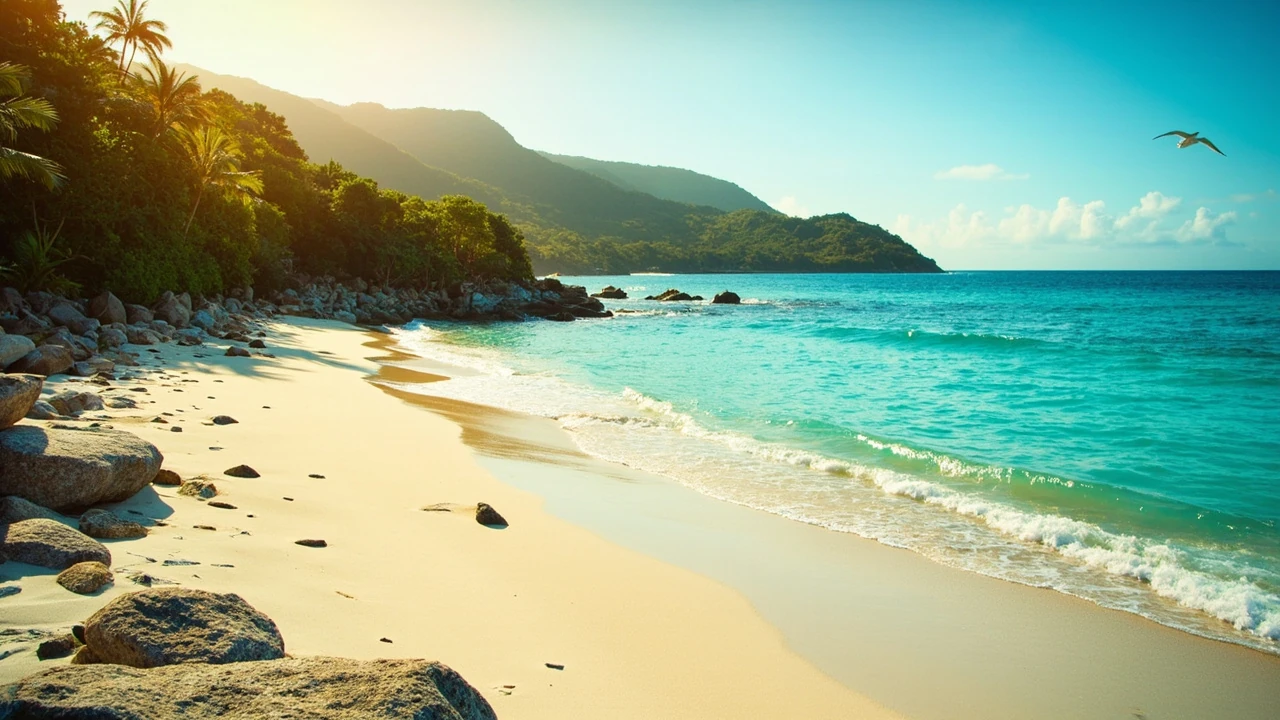
Anse Lazio is one of the island’s headline beaches and a sensible choice for travelers who want to experience a place strongly associated with Praslin. Its name carries enough recognition to appear in island guides and visitor conversations. Plan the visit as more than a quick photo stop: arrive with enough time to settle in, swim if conditions permit, walk along the coast, and enjoy the landscape without trying to force it into a photo-centered visit.
Anse Georgette is another named beach that travelers use as a basis for comparing the island’s coastal options. Rather than assuming it meets every beach preference, think about what would make the day successful. A beach with easy access from your base may be more useful than a more distant one. A visitor who wants to combine shoreline time with other activities may prefer a beach near a settlement or transport point, while someone staying nearby may have the opposite priority.
For a geographic and historical overview of the island’s location, settlements, beaches, and principal natural features, the [island’s geographic and historical overview](https://en.wikipedia.org/wiki/Praslin) provides a useful baseline. It also identifies the surrounding islands that appear in later sections of this guide.
Beach conditions should guide the final choice. Tropical weather can change quickly, and a beach that looks ideal on arrival may not offer the swimming or walking conditions you expected. Stay flexible about the order of your coastal days, keep essential items accessible, and avoid an itinerary so tightly scheduled that a delayed transfer or unsuitable sea conditions leave no alternative.
| Beach approach | Best for | Planning priority |
|---|---|---|
| Anse Lazio | Travelers seeking one of Praslin’s best-known coastal destinations | Allow a relaxed visit and confirm current site guidance |
| Anse Georgette | Visitors comparing two prominent named beaches | Check transport and conditions before setting the day |
| Beach near your accommodation | Travelers who value convenience and frequent shoreline time | Confirm walking distance and access conditions |
| Less prominent beach selected on the island | Visitors seeking a quieter or less structured coastal day | Ask locally about conditions, facilities, and responsible use |
| Moving between two beaches | Groups with different activity preferences | Compare transport time with the value of changing locations |
- Bring more water and sun protection than you expect to use immediately.
- Keep footwear suitable for hot sand, rocks, and uneven paths.
- Ask before photographing people, entering private areas, or taking natural objects.
- Leave coral, shells, vegetation, and wildlife undisturbed.
- Return before fatigue or intense sun turns a pleasant beach day into a difficult transfer.
How to plan a day around the Vallée de Mai
The Vallée de Mai is one of the defining nature experiences in Praslin. The preserve, established in 1979, is known for coco de mer and vanilla orchids, while the island also supports tropical forest habitats associated with birds such as the Seychelles bulbul and Seychelles black parrot. This combination of distinctive plants, forest atmosphere, and wildlife makes the area more than a standard attraction stop.
Give the visit a dedicated block of time. A rushed stop can create the impression that you have seen the main highlights while missing the qualities that make the place distinct. Aim for a half-day structure that allows for walking, observation, transport, and an unhurried departure. Adjust that estimate according to the size of your group, the terrain you need to manage, and the amount of time available.
Prepare by learning how the preserve operates before arrival. Confirm current visiting hours, entry arrangements, permitted routes, guide requirements, weather restrictions, and accessibility information. Tropical nature can be humid, and even a protected forest may involve uneven ground, insects, and steep sections. Suitable clothing and footwear make a meaningful difference, but visitors should not enter closed areas or improvise routes to avoid restrictions.
| Feature | What to look for | Visitor approach |
|---|---|---|
| Coco de mer | The distinctive palm associated with the Vallée de Mai | Observe the plant and allow time to understand its significance |
| Vanilla orchids | Orchid growth within the preserve’s tropical habitat | Move slowly and avoid handling plants |
| Forest birds | Potential sightings of Seychelles bulbul or Seychelles black parrot | Use patient observation rather than noise or a strict sighting checklist |
| Protected landscapes | The wider network of forest and important bird habitat around Praslin | Stay on approved paths and follow access rules |
The preserve also works well as part of a broader nature day rather than an isolated visit. Combine it with a beach stop only if the timing remains realistic. A long forest visit followed by an immediate transfer to a remote shoreline can leave too little time for either activity. For most first-time visitors, the stronger choice is to complete one substantial nature experience before deciding what to do later.
Do not schedule wildlife sightings as if every bird or animal must appear. Tropical locations reward attention, but conditions and visitor movement affect what you may see. A guide may identify sounds, tracks, plant adaptations, or distant birds that would otherwise pass unnoticed. Learning to notice small details can make the visit more satisfying even when a dramatic close encounter does not occur.
Praslin’s history and the story behind its name
The island’s modern name has a specific historical origin. Explorer Lazare Picault called it Isle de Palmes in 1744. During that period, the island was used as a hideaway by pirates and Arab merchants. It was renamed Praslin in 1768 in honor of César Gabriel de Choiseul, duc de Praslin. These details help explain why a place known today for beaches and tropical forests also has a deeper historical identity.
For travelers, history becomes most meaningful when connected to the landscape. The names of settlements, beaches, offshore islands, and natural areas form a record of the people who navigated, inhabited, and visited these lands. Ask local guides or reliable island sources about how communities interpret that record. A short historical explanation can add more to a day than a long background section read before arrival.
The same principle applies to cultural experiences. Praslin is part of the wider Seychelles, an island nation whose individual islands have distinct geographies and visitor experiences. Avoid treating the destination as a collection of interchangeable tropical stops. The surrounding islands listed in the geographic overview—Curieuse, La Digue, Cousin, Cousine, and Aride—each offer a different reason to leave the main island, but they remain connected to the broader national and regional story.
Travelers who enjoy understanding how history and place interact can compare Praslin with other destinations where geography has shaped settlement and identity. For example, Peru’s historical timeline demonstrates how landscapes preserve layers of human history far beyond a single famous civilization. The comparison is not about equating the two places; it is a reminder that place names and present-day landscapes often contain older narratives.
A second useful comparison concerns regional diversity rather than a single historical sequence. Laos reflects extensive human and cultural diversity despite the way a country’s physical size can simplify public understanding. Praslin offers a smaller-scale lesson of the same principle: one island can contain distinct settlements, habitats, coastal areas, and offshore destinations that deserve more attention than a single headline beach.
Getting around Praslin and reducing transport friction
Arrival by air is the most direct introduction to the island because Praslin has its own airport. That convenience does not remove the need for planning after landing. Confirm how you will reach your accommodation, whether a transfer is included, what time the flight is scheduled to arrive, and what happens if the flight changes.
Your movement around Praslin depends on where you stay and which activities you choose. Rather than assuming a particular transport mode will always be available, use the following sequence:
- Confirm the arrival transfer: provide flight details and ask what the provider expects on arrival day.
- Map the first journey from the airport to your base: understand the expected time and any late-arrival procedure.
- Ask how each major activity is reached: get current guidance from the attraction, accommodation, or local transport provider.
- Group nearby activities: combine stops that sit in the same part of the island rather than crossing back and forth.
- Keep a fallback: if weather disrupts a boat trip or road transfer, retain a flexible activity that does not depend on the same transport.
Road travel also requires attention to the physical reality of a tropical island. Routes may be narrow, curves may be tight, and a short distance on a map can feel longer behind the wheel. If you plan to drive, verify the license and insurance requirements that apply to your nationality, ask the rental provider about fuel and vehicle type, and take time to understand local driving practices.
Public or shared transport can suit some routes, while a private vehicle or organized excursion may make sense for a small group. The better choice is the one that provides a dependable connection without taking control of the entire day. If a shared vehicle runs on a fixed schedule, a private ride may add flexibility. If several guests are visiting the same place together, a shared arrangement may be more efficient and less expensive.
| Transport decision | Best suited to | Main advantage | Main limitation |
|---|---|---|---|
| Accommodation transfer | Every arrival | Reduces uncertainty after the flight | Requires advance confirmation |
| Self-drive | Groups wanting flexible road access | Control over stops and departure times | Driving conditions, licensing, and insurance require attention |
| Taxi or local ride | Point-to-point travel | Useful without committing to a full-day vehicle | Availability and price should be confirmed |
| Shared transport | Fixed destinations on an established route | Efficient for a simple itinerary | Less control over timing |
| Boat excursion | Nearby-island visits | Access to destinations off Praslin | Weather, sea conditions, and schedules affect the plan |
Protect your final day from a rushed departure. If your flight leaves early, arrange the transfer before the previous night and keep your morning possessions ready. If the schedule allows, a final short beach walk can provide a pleasant closing experience without adding another distant excursion.
Which nearby island is worth adding to a Praslin trip?
Praslin sits within a cluster of islands that can extend a Seychelles journey beyond a single destination. Curieuse, La Digue, Cousin, Cousine, and Aride are among the surrounding islands identified with Praslin. Round Island and Chauve Souris are also nearby offshore islets with hotel accommodations. Their existence does not mean every traveler should visit several of them. Transport schedules, sea conditions, permitted activities, and personal interests should determine whether an island excursion improves the trip.
La Digue is a practical option when the main goal is another Seychelles island experience. Curieuse appeals to travelers interested in an island with its own atmosphere and visitor sites. Cousin and Cousine are especially relevant to people who place nature and wildlife high on their list. Aride is another destination associated with wildlife viewing. These are planning directions rather than fixed itineraries: confirm current access, permitted activities, and duration with operators before choosing.
| Nearby destination | Best reason to consider it | Questions to confirm before booking |
|---|---|---|
| La Digue | Add a second main island and a different pace | Current transfer method, excursion length, and return arrangements |
| Curieuse | Explore an island known for its own coastal and visitor setting | Boat conditions, landing arrangements, and available activities |
| Cousin or Cousine | Prioritize nature, birds, and a quieter island visit | Access restrictions, guide requirements, and group size |
| Aride | Place wildlife viewing at the center of the excursion | Seasonal access, permitted activities, and current conditions |
| Round Island or Chauve Souris | Consider a stay-based island experience rather than a short outing | Accommodation details, transfers, availability, and island facilities |
Choose an excursion by the experience it creates, not simply by the number of destinations in the itinerary. One well-chosen island day can provide the variety that a three-stop tour only skims across. Ask the operator what the experience involves if weather forces an itinerary change, what can be canceled, and how you return if a boat is delayed.
- Choose La Digue for a broader island-hopping experience.
- Choose Curieuse when a distinctive island visit is the priority.
- Choose Cousin or Cousine for nature-led travel.
- Choose Aride when wildlife observation drives the decision.
- Choose an island with accommodation only when spending at least one full night there will not overcomplicate your schedule.
Building a responsible, realistic Praslin itinerary
A memorable Praslin itinerary is specific enough to guide decisions but flexible enough to survive an island day. Use a simple daily plan with one primary activity, one optional activity, and protected time for meals, rest, and spontaneous shoreline visits. This structure prevents the common mistake of converting a vacation into a checklist.
For a first visit, a strong sequence places nature early, builds beach time around it, and adds a nearby-island excursion only after the main island has been properly explored. If your stay is short, skip the excursion rather than sacrificing all three main attractions: the coast, the forest, and the island’s historical character.
| Trip length | Recommended structure | What to avoid |
|---|---|---|
| One full day | One substantial beach block, one nature visit, and a relaxed evening | Attempting an offshore island and major attractions in the same day |
| Two or three days | Separate beach, forest, and history days; consider one evening activity | Repeating the same transfer several times |
| Four days or more | Add one carefully selected nearby-island excursion and leave one flexible day | Filling every available day with prebooked activities |
A possible four-day outline would begin with an arrival day focused on the transfer to your accommodation and a nearby beach. Spend the next morning and early afternoon in the Vallée de Mai, then leave the late afternoon unscheduled. Use the third day for a beach such as Anse Lazio or Anse Georgette, depending on conditions, and add a historical or local-culture activity when the schedule permits. Reserve the fourth day for a nearby island, another beach, or a slow return to whichever part of Praslin you prefer.
Responsible travel also means using scarce resources thoughtfully. Carry out what you carry in, avoid damaging coral or vegetation, do not feed wildlife, and respect access rules in protected areas. When choosing excursions, favor operators who explain their environmental practices clearly rather than making broad claims without detail. Ask how visitor numbers are managed, what remains on the island, and what happens when conditions require a change of plan.
Final preparation should include the practical details that are easy to overlook:
- Confirm identity, entry, health, and insurance requirements for every traveler.
- Download or print confirmations in case internet access is limited.
- Carry a small reusable bag for rubbish and a waterproof container for valuables.
- Pack reef-safe sun protection and insect repellent suited to the environment.
- Bring footwear that works on sand, forest paths, and uneven coastal terrain.
- Save the accommodation contact, transfer provider, and excursion operator in your phone.
- Ask the local operator about weather warnings and changing sea or road conditions.
- Keep at least one flexible activity that can work if an excursion is canceled.
The best final day is usually not the most ambitious one. Leave enough time for a calm breakfast, a short walk, a last swim if appropriate, and a transfer that does not depend on perfect traffic. Praslin is rewarding precisely because its major attractions can be appreciated without exhausting the island’s limited hours.
Frequently asked questions
What is Praslin best known for?
Praslin is best known for its beaches, including Anse Lazio and Anse Georgette, and for the Vallée de Mai Nature Preserve. The preserve is particularly associated with coco de mer and vanilla orchids. The island also has tropical forest habitat, distinctive coastal scenery, and a history connected to the names Isle de Palmes and Praslin. Most travelers divide their attention between the coast and the forest rather than treating Praslin as only a beach destination.
Which Praslin beach should visitors choose first?
Start with the beach that best matches your priorities and location. Anse Lazio is one of the island’s most recognized beaches, while Anse Georgette offers another prominent named option. A beach close to your accommodation may be more convenient for a relaxed day. Current access and conditions should also influence the decision, so confirm local guidance rather than relying only on photographs or a fixed itinerary.
How much time should be allowed for the Vallée de Mai?
A substantial half-day is a sensible starting point for many visitors because the preserve deserves more than a brief photo stop. Adjust the time for group pace, walking ability, transport time, weather, and your interest in the forest. Confirm current entry and visiting arrangements in advance. Attempting to combine the visit with a distant beach or island excursion may leave too little time for either experience.
Can visitors take a boat from Praslin to nearby islands?
Boat excursions connect Praslin with surrounding destinations, but schedules and operating conditions can change. Confirm the current route, departure point, return arrangement, duration, and weather policy directly with the operator. La Digue, Curieuse, Cousin, Cousine, and Aride are among the islands connected to the destination context. Availability and suitable activities may vary, so avoid booking around an assumed schedule that you have not reconfirmed.
Is Praslin suitable for a relaxed family vacation?
Praslin can suit families because beach time and nature can be combined in the same broader itinerary. The best base depends on the group’s mobility, meal preferences, and interest in excursions. A shorter first day helps children and older travelers adjust after travel. Choose activities that match everyone’s energy level rather than trying to include every attraction, and confirm accessibility details when necessary.
How many days are enough for Praslin?
Two or three full days allow time for the major beach and nature experiences without feeling rushed. One day works for a short visit if the primary goal is the coast, while four days or more provide room for one nearby-island excursion and a flexible day. The most useful itinerary includes fewer activities than the total trip length suggests, with enough margin for transport and weather.
What should travelers pack for Praslin?
Pack lightweight clothing suitable for a tropical climate, sun protection, insect repellent, water, and footwear for sand, forest paths, and uneven ground. A light rain layer can be useful when moving between outdoor activities. Bring identification, travel documents, medication, and copies of important reservations. Reef-safe sun protection and a reusable container for rubbish also support more responsible travel.
Is it better to rent a car on Praslin?
A car can help groups visit different parts of the island with flexible timing, but it is not automatically the best transport choice. Narrow roads, local driving practices, licensing, insurance, and fuel arrangements require consideration. Shared transport or an organized day trip may be simpler for visitors with limited driving experience or a narrow activity list. Confirm the actual benefits for your planned routes before booking.
What is the best time to visit Praslin?
The best time depends on the conditions you want and the activities you prioritize. Check current weather guidance, sea conditions, and any seasonal changes affecting excursions before making firm plans. Build flexibility into the itinerary so a beach day can move and a nature visit can receive better conditions. Booking transport and accommodation around confirmed schedules should be the final step after those local details are clear.