Ask an American what Mexico is known for and the answers come fast.
Tacos. Cancún. Tequila. Mariachi. Día de los Muertos. Maybe Chichén Itzá.
None of those answers are wrong.
They are just very incomplete.
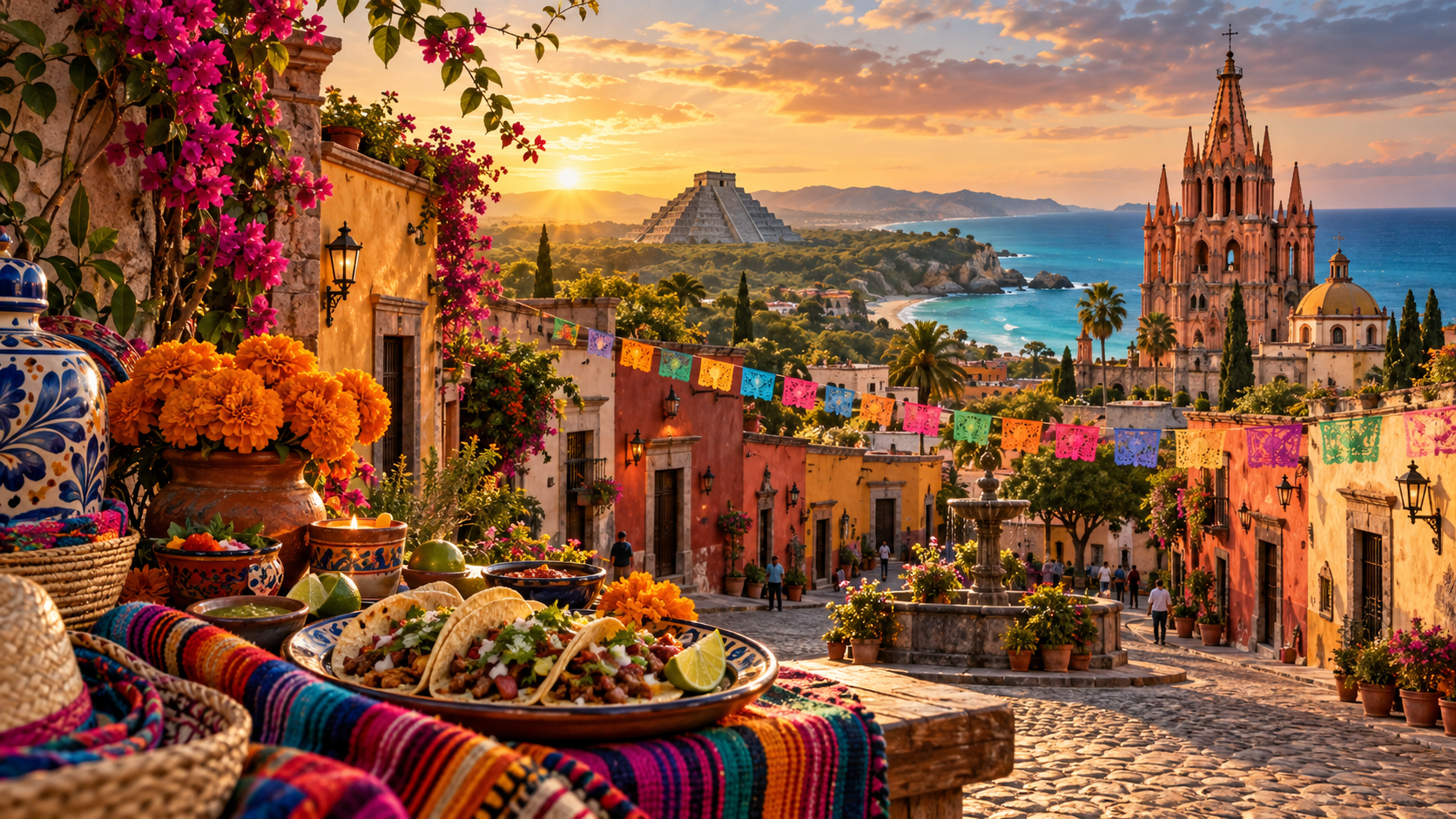
Mexico is one of those countries that gets reduced to a handful of famous images because the famous images are so strong. Bright papel picado. A taco stand at night. A beach in the Caribbean. A mariachi band in matching charro suits. A pyramid rising above jungle.
But Mexico is huge, culturally layered and wildly different from one region to another.
Northern desert landscapes do not feel like Oaxaca. Mexico City does not feel like Yucatán. Baja California does not feel like Chiapas. A coastal town in Nayarit can have almost nothing in common with a mountain village in central Mexico except the country on the map.
So if you’re asking what is mexico known for, the better answer is this: Mexico is known for an unusually deep combination of food, Indigenous heritage, colonial cities, music, art, archaeology, beaches, mountains, festivals and living traditions that are still part of daily life.
And the more you look, the less it feels like one simple destination.
Mexican food may be the country’s biggest global export
Let’s start with the obvious one.
Mexican food is everywhere in the United States.
That familiarity can make Americans think they already understand it.
Then they visit Mexico.
Suddenly tacos are not one food. Mole is not one sauce. Salsa does not mean “red or green.” Corn is not simply a side ingredient.
Traditional Mexican cuisine was added to UNESCO’s Representative List of the Intangible Cultural Heritage of Humanity in 2010.
The recognition is not about one famous dish.
It focuses on a whole cultural system built around farming, cooking methods, rituals, community knowledge and ingredients such as corn, beans and chile.
That distinction matters.
Mexican cuisine is not just a menu.
It is a way of growing, preparing and sharing food.
Corn is the foundation, not a garnish
Maize has been central to food systems in Mexico for thousands of years.
Tortillas, tamales, atole, pozole and countless regional dishes depend on it.
One of the key traditional processes is nixtamalization, where corn is treated with an alkaline solution before being ground.
That process changes texture, flavor and nutritional value.
In other words, the tortilla on your plate carries a lot more history than it looks like it does.
And corn varieties differ.
White, yellow, blue, red and other local forms appear across the country.
That is why a handmade tortilla at a market can taste completely different from a supermarket tortilla in the United States.
Tacos are famous because they can be almost anything
The word taco sounds simple.
It is not.
Tacos al pastor, tacos de carnitas, fish tacos, barbacoa, birria, suadero, cochinita pibil and countless local versions can share the same basic idea while tasting nothing alike.
A good taco is often incredibly straightforward.
Tortilla. Filling. Salsa. Onion. Cilantro. Maybe lime.
No tower of ingredients.
No plate designed for Instagram.
Just balance.
And the best taco may cost less than the coffee you had that morning.
| Food | Region Strongly Associated With It | What to Expect |
|---|---|---|
| Tacos al pastor | Mexico City and central Mexico | Spit-roasted pork, pineapple, onion and cilantro |
| Mole | Oaxaca and Puebla | Complex sauces with chiles, spices and many variations |
| Cochinita pibil | Yucatán | Slow-cooked pork with achiote and citrus |
| Birria | Jalisco | Rich stewed meat, often served with consommé |
| Fish tacos | Baja California | Fried or grilled fish, cabbage and fresh toppings |
| Tlayudas | Oaxaca | Large crisp tortilla with beans, cheese and toppings |
Trying regional food is one of the easiest ways to understand how different Mexico can feel from state to state.
Mole is not just chocolate sauce
This deserves clarification.
Outside Mexico, mole sometimes gets described as “that Mexican sauce with chocolate.”
That is a very incomplete description.
Mole is a broad family of sauces that can involve chiles, spices, seeds, nuts, herbs, fruit and sometimes chocolate.
Some versions are dark and rich. Others are green, yellow or red.
Oaxaca alone is famous for several different moles.
The point is depth.
These sauces can involve long ingredient lists and careful preparation.
This is not ketchup with cocoa powder.
Día de los Muertos is about remembrance, not Halloween
Día de los Muertos may be Mexico’s most recognizable celebration internationally.
Bright marigolds, painted skull imagery, candles and decorated altars appear everywhere in popular culture now.
But the meaning often gets simplified.
The Day of the Dead is rooted in remembrance of deceased family members and loved ones.
Families create ofrendas with photographs, candles, food, flowers and personal objects associated with the dead.
UNESCO recognizes Indigenous festivities dedicated to the dead as part of the Intangible Cultural Heritage of Humanity.
The celebration takes place around the end of October and beginning of November.
It can be joyful, emotional, religious, family-centered and deeply personal at the same time.
And no, it is not “Mexican Halloween.”
The two happen near each other on the calendar.
That does not make them the same tradition.
Mexico is one of the world’s richest countries for archaeology
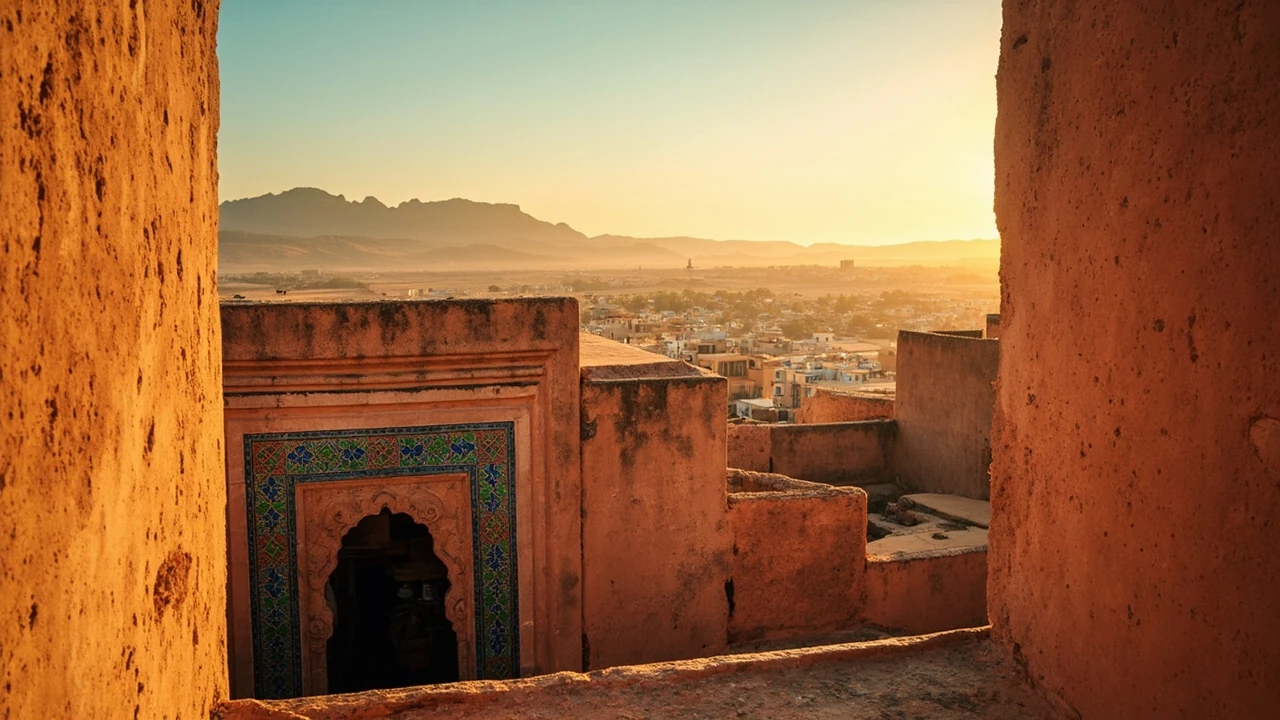
Pre-Hispanic civilizations left major cities, temples, ceremonial centers and road systems across the country.
The Maya are the best known internationally, but they were far from the only civilization.
Teotihuacan, for example, was built by a culture distinct from the later Aztec Empire.
Monte Albán is associated with Zapotec civilization.
El Tajín reflects Totonac culture.
Palenque and Calakmul are major Maya sites.
Paquimé in Chihuahua represents a very different cultural tradition in northern Mexico.
The country currently has 36 UNESCO World Heritage properties, including archaeological zones, historic cities, natural reserves and cultural landscapes.
Chichén Itzá is famous, but it is not the whole Maya world
Chichén Itzá gets the headlines.
Its pyramid, El Castillo, is one of Mexico’s most recognizable landmarks.
It is also crowded for exactly that reason.
The Maya world stretches far beyond one archaeological site.
Palenque sits in lush Chiapas jungle. Uxmal is known for Puuc-style architecture. Calakmul lies deep within forest in Campeche.
And living Maya communities remain part of Mexico today.
That last point matters.
The Maya are not just an ancient civilization from a textbook.
Maya languages and cultural traditions continue across parts of southern Mexico and Central America.
Teotihuacan still feels enormous
Teotihuacan sits northeast of Mexico City and is one of the easiest major archaeological day trips from the capital.
The Avenue of the Dead runs between monumental structures including the Pyramid of the Sun and Pyramid of the Moon.
The scale is what sticks with people.
Photos flatten it.
Walking the site makes the urban planning much more obvious.
This was not a small ceremonial village.
It was a major ancient city.
Mexico City is one of the country’s biggest surprises
Some Americans still think of Mexico mainly as beaches and resort towns.
Then they arrive in Mexico City.
The capital is enormous, high-altitude, creative and packed with museums, restaurants, parks, neighborhoods and architecture.
Chapultepec Park alone is one of the largest urban parks in the Americas.
The historic center contains the Metropolitan Cathedral, Palacio Nacional, Templo Mayor remains and large public squares.
Neighborhoods such as Roma, Condesa and Coyoacán have completely different moods.
And the food scene is almost unfair.
You can eat at a street stand for lunch and a world-famous tasting-menu restaurant for dinner.
Frida Kahlo and Diego Rivera are part of the global image of Mexico
Mexican art became internationally influential through artists including Frida Kahlo, Diego Rivera, José Clemente Orozco and David Alfaro Siqueiros.
Rivera, Orozco and Siqueiros are strongly associated with Mexican muralism.
Huge public murals addressed history, labor, Indigenous heritage, social conflict and national identity.
The paintings were not designed only for private galleries.
They were public statements.
Kahlo’s work became globally famous in a different way, with intensely personal paintings tied to identity, physical pain, relationships and Mexican visual culture.
Her former home, the Casa Azul in Coyoacán, is now one of Mexico City’s best-known museums.
Mariachi may be Mexico’s most recognizable sound
Trumpets begin.
Violins follow.
Someone sings like heartbreak has become a full-time job.
You know the sound.
Mariachi originated in western Mexico and is especially associated with Jalisco.
UNESCO added mariachi, string music, song and trumpet to the Representative List of Intangible Cultural Heritage in 2011.
The tradition includes ensembles with violins, trumpets and guitar-family instruments.
Mariachi is heard at celebrations, restaurants, public squares and family events.
It can be festive.
It can also be deeply sentimental.
Often within the same set.
Tequila really does come from a place
Tequila is not simply the generic Mexican word for strong alcohol.
The spirit is made from blue agave and tied to specific legally recognized production regions, most famously around the town of Tequila in Jalisco.
The Agave Landscape and Ancient Industrial Facilities of Tequila are also on UNESCO’s World Heritage List.
The landscape itself is part of the appeal.
Rows of blue-green agave stretch across fields under strong sun, with volcanic terrain in the distance.
And good tequila is not meant to be automatically slammed with salt and lime.
That may come as disappointing news to several college memories.
Mezcal is its own thing
Tequila is technically part of the wider agave-spirit family, but mezcal has different production traditions and can involve different agave species.
Oaxaca is particularly associated with mezcal.
Many traditional versions have smoky notes because agave hearts may be roasted in underground pits before fermentation and distillation.
But “smoky” does not describe all mezcal any more than “oaky” describes every wine.
Small producers can create wildly different flavors.
Beaches are famous for good reason
Mexico has coastlines on the Pacific Ocean, Gulf of Mexico, Caribbean Sea and Gulf of California.
That produces very different beach experiences.
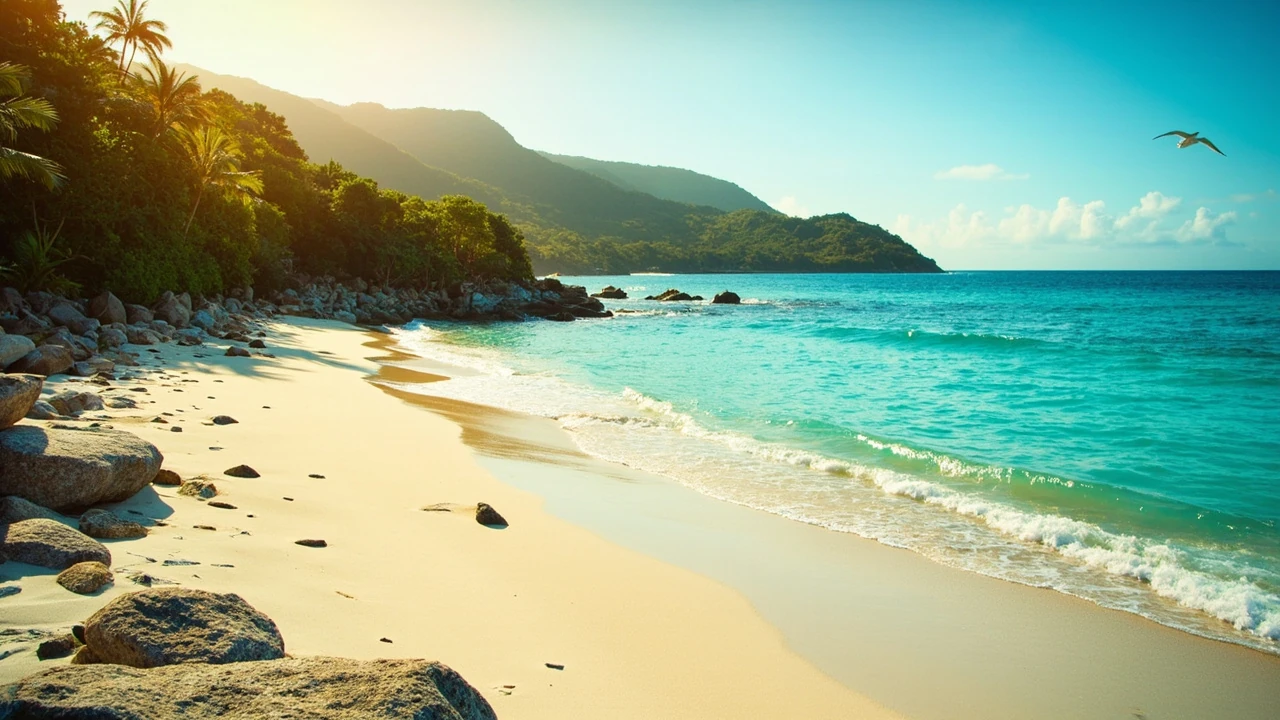
Cancún and Riviera Maya offer pale sand and turquoise Caribbean water.
Oaxaca’s Pacific coast brings surf towns and rougher ocean conditions.
Baja California Sur offers desert landscapes meeting blue sea.
Nayarit mixes resort zones with smaller coastal communities.
Huatulco is known for bays and Pacific scenery.
So saying “Mexican beach” is a bit like saying “American beach.”
Miami and Oregon are both technically correct answers.
They are not the same vacation.
| Coast | Known For | General Feel |
|---|---|---|
| Riviera Maya | Caribbean water, cenotes, Maya sites | Resort-heavy and easy for first trips |
| Baja California Sur | Desert, Sea of Cortez, marine life | Dramatic and outdoorsy |
| Oaxaca Coast | Surf, beaches, smaller towns | Casual and Pacific |
| Riviera Nayarit | Beach towns and resorts | Mix of polished and relaxed |
| Yucatán Gulf Coast | Quiet beaches, wildlife, small towns | Slower and less resort-focused |
Cenotes may be Mexico’s strangest swimming pools
The Yucatán Peninsula contains thousands of cenotes – natural sinkholes filled with groundwater.
Some are open like small lakes.
Others sit inside caves with shafts of sunlight cutting through the ceiling.
They formed through the region’s limestone geology and were culturally significant to the Maya.
Today, many are popular swimming or diving sites.
Respect the rules.
These are natural water systems, not chlorine pools with decorative rocks.
Mexico’s landscapes go far beyond tropical beaches
This may be the country’s biggest visual surprise.
Mexico contains deserts, volcanoes, pine forests, cloud forests, jungle, canyons, high plateaus, mangroves and coral environments.
El Pinacate in Sonora combines desert and volcanic landscapes.
Sian Ka’an in Quintana Roo protects tropical ecosystems and wetlands.
The Monarch Butterfly Biosphere Reserve becomes internationally famous during seasonal butterfly migration.
The Gulf of California contains extraordinary marine biodiversity.
Several of these natural areas are UNESCO World Heritage properties.
Monarch butterflies turn a forest orange
Every year, monarch butterflies migrate enormous distances between North America and central Mexico.
Millions may cluster in high-elevation forests in the states of Michoacán and México.
The experience can look almost unreal when butterflies cover tree branches and fill the air as temperatures warm.
The Monarch Butterfly Biosphere Reserve protects key wintering areas.
This is one of Mexico’s most unusual natural experiences.
And it is seasonal.
Do not show up in July expecting the same scene you saw in a February photograph.
Mexico has some seriously beautiful colonial cities
Spanish colonial history left a large architectural footprint.
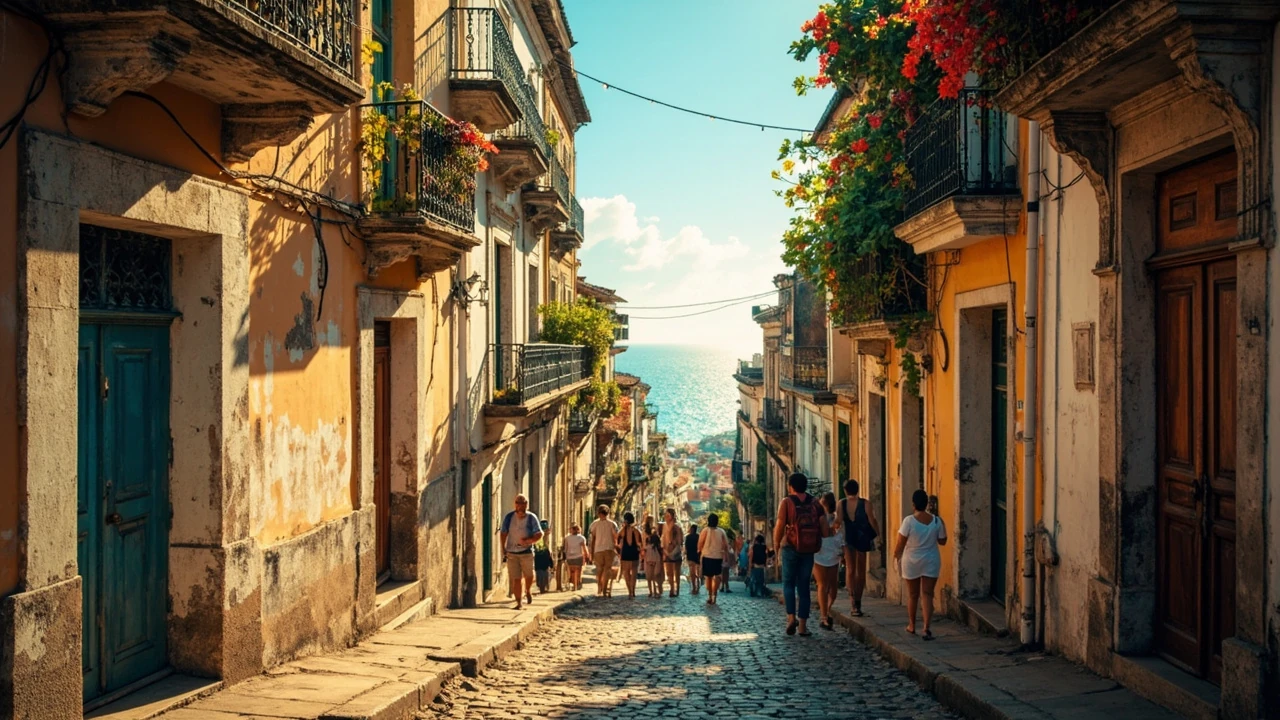
Cities such as Guanajuato, Puebla, Morelia, Querétaro, San Miguel de Allende and Oaxaca contain historic centers with churches, plazas, colorful facades and stone streets.
Several are UNESCO-listed.
But calling them simply “colonial cities” can hide earlier Indigenous histories and the complicated systems behind their development.
Travel is more interesting when you notice all the layers.
Oaxaca may pack the most culture into one trip
Oaxaca is one of those destinations people visit for four days and immediately begin planning a return.
The city is known for food, mezcal, markets, textiles, Indigenous traditions and nearby archaeological sites such as Monte Albán.
Regional dishes include several moles, tlayudas and tamales.
Markets are full of chiles, chocolate, cheese, herbs and prepared foods.
Craft traditions vary between surrounding communities.
And yes, people eat chapulines – toasted grasshoppers – in parts of Oaxaca.
You do not have to.
But they’re there.
Mexico is famous for color, but the color usually has context
Bright painted houses, embroidered clothing, ceramic tiles, papel picado and decorated festival streets all contribute to the global visual idea of Mexico.
But this is not one national design theme applied everywhere.
Colors, materials and patterns often reflect local craft traditions, Indigenous communities, climate and history.
Talavera pottery from Puebla has its own tradition.
Textiles in Oaxaca vary between communities.
Huichol/Wixárika beadwork carries different meanings from Maya embroidery.
So avoid treating every colorful object as interchangeable “Mexican style.”
What should you actually experience on a first trip?
Try to combine different versions of the country.
- Spend time in a major city rather than going directly from airport to resort.
- Eat regional Mexican food instead of searching for the same taco everywhere.
- Visit at least one archaeological site with enough time to understand its history.
- See one natural landscape beyond the beach.
- Visit a market where people actually shop for everyday food.
- Learn which Indigenous cultures are connected to the region you’re visiting.
Mexico makes far more sense when you stop treating it as one culture with one menu.
What Mexico is known for changes by region
This is probably the most important point.
Jalisco brings mariachi, tequila and birria.
Oaxaca is associated with mole, mezcal and diverse Indigenous traditions.
Yucatán has Maya heritage, cenotes and foods such as cochinita pibil.
Baja California has wine, seafood and fish tacos.
Puebla has Talavera ceramics and a major culinary tradition.
Michoacán is closely tied to traditional cuisine and Day of the Dead practices.
Mexico City brings together almost everything while adding its own huge urban identity.
So the answer to “what is Mexico known for?” depends partly on where you stand.
Traditional celebrations remain a major part of cultural life
Día de los Muertos gets the international attention, but Mexico has many regional festivals and religious celebrations.
Some blend Catholic traditions with older Indigenous practices.
Others center on local saints, agricultural cycles, music, dance or community identity.
UNESCO’s Intangible Cultural Heritage list for Mexico includes mariachi, traditional Mexican cuisine, the ritual ceremony of the Voladores, P’urhépecha pirekua singing, Parachicos traditions and Indigenous celebrations dedicated to the dead, among others.
These are living traditions.
Not costumes created for visitors.
Pueblos Mágicos made small-town travel much more visible
Mexico’s tourism system uses the designation Pueblo Mágico for towns recognized for cultural, historical, architectural or natural qualities.
The category has made smaller destinations far more visible to travelers.
Places such as Todos Santos, Loreto and many inland towns attract visitors who want something beyond major cities and beach resorts.
Some are heavily visited now.
Others still feel surprisingly quiet.
The label does not guarantee you’ll love a town.
But it is a useful starting point when building a road trip.
Mexican hospitality is famous, but don’t reduce it to a stereotype
Travel writing loves phrases like “warm people” and “friendly locals.”
Those descriptions can become lazy fast.
Mexico is a country of more than 100 million people.
Not everyone behaves the same way.
Still, social life often places strong emphasis on family, shared meals and hospitality.
Meals can run long.
Invitations may include more people than you expected.
Conversation matters.
And feeding someone is often a form of care.
That part becomes obvious fairly quickly.
When is the best time to visit Mexico?
There is no one answer because Mexico’s geography is too varied.
Coastal Yucatán has a different climate from Mexico City.
Baja California differs from Chiapas.
High-altitude central cities can have cool evenings even when people imagine Mexico as permanently hot.
Generally, the drier months from late fall through spring are popular in many regions.
Summer can bring heavier rain to parts of central and southern Mexico.
Hurricane season matters on both Caribbean and Pacific coasts.
But specific timing depends on where you’re going.
Plan by state and elevation, not simply by country.
What should you eat first?
This is an impossible question, but here’s a good starting point:
- eat tacos from a busy local stand;
- try a regional mole where it is actually part of local cuisine;
- order tamales at least once;
- try pozole if you see a place known for it;
- eat fresh fruit with chile and lime if that sounds good to you;
- have pan dulce with coffee in the morning;
- try regional street snacks instead of searching only for restaurant “must-eats.”
The last one is where trips usually get memorable.
FAQ About What Mexico Is Known For
What is Mexico most famous for?
Mexico is especially famous for its food, Indigenous and colonial heritage, beaches, archaeological sites, mariachi, Día de los Muertos, tequila, art and highly varied regional cultures.
What food is Mexico known for?
Tacos, tamales, mole, pozole, birria, cochinita pibil, tortillas and regional salsas are among the best-known foods. Mexican cuisine varies dramatically between states.
What cultural traditions is Mexico famous for?
Día de los Muertos, mariachi, traditional cuisine, charrería, Indigenous dances, regional festivals and craft traditions are some of the country’s best-known cultural practices.
What landmarks is Mexico known for?
Chichén Itzá, Teotihuacan, the historic center of Mexico City, Palenque, Monte Albán, Guanajuato and many UNESCO-listed cities and archaeological sites are among the most famous.
What drinks is Mexico known for?
Tequila and mezcal are the most internationally famous, but Mexico also has regional drinks such as pulque, raicilla, bacanora, tepache and various traditional non-alcoholic beverages.
What natural places is Mexico known for?
Mexico is known for Caribbean beaches, cenotes, Baja California desert coastlines, the Monarch Butterfly Biosphere Reserve, the Gulf of California, tropical forests and mountain landscapes.
How many UNESCO World Heritage Sites does Mexico have?
As of 2026, Mexico has 36 properties on UNESCO’s World Heritage List, including cultural, natural and mixed sites.
Mexico Is Famous for the Big Things, but the Small Things Explain It Better
Mexico’s global image is powerful.
Tacos.
Mariachi.
Ancient pyramids.
Blue Caribbean water.
Tequila bottles.
Marigolds and candles during Día de los Muertos.
Those images are real.
They just are not enough.
Mexico becomes more interesting when you notice the everyday layers between them.
A tortilla pressed by hand.
A market seller cutting fruit before sunrise.
A family meal that keeps gaining extra chairs.
A colonial plaza sitting above much older Indigenous history.
A mariachi song that changes from joyful to devastating in three minutes.
A road that leaves the beach and climbs into pine-covered mountains.
That is the deeper answer to what is mexico known for.
It is known for food because the food carries history.
It is known for festivals because traditions remain alive.
It is known for archaeological sites because major civilizations built cities across the landscape long before modern Mexico existed.
It is known for beaches because the country has thousands of miles of coastline.
And it is known for color because local art and craft traditions never fit into one muted national style.
So if you visit, do not try to “see Mexico” in one resort week.
Pick a region.
Learn what makes it different.
Eat what that region actually eats.
Visit one famous place and one place you had never heard of before planning the trip.
Then come back.
Mexico is simply too varied for one version of it to be enough.