Souks: what they are and why travelers visit them
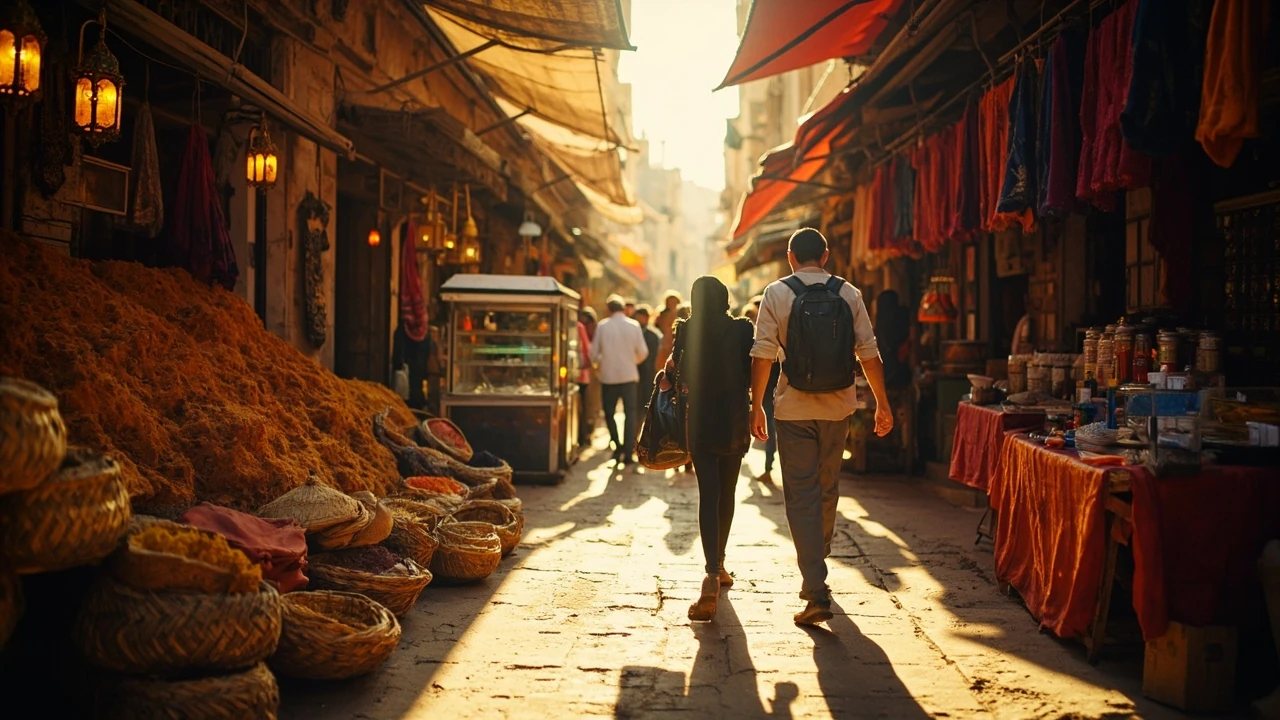
A souk is more than a row of shops. It is a traditional commercial district where food, crafts, clothing, household goods, and everyday services share streets designed for walking rather than speed. The experience can feel completely different from a shopping mall: bargaining may be expected, products may be displayed outside, and a merchant may explain the history of an item rather than simply scan a barcode.
Travelers visit souks for several reasons. Some come for a specific product, such as leather goods, spices, jewelry, or a regional textile. Others treat the market as a way to understand local food and daily life. A well-chosen souk can also reveal architecture and street patterns that have survived long after surrounding buildings changed.
The term is associated especially with Middle Eastern and North African markets, but travelers also encounter souks in places such as Morocco, Lebanon, Egypt, Oman, and parts of Central Asia. Names and boundaries vary. A district may be called a souk, bazaar, market, or medina, while a single covered lane may have a more specific name. The useful question is therefore not simply whether a destination has “a souk.” It is what kind of market experience the traveler wants.
Beirut Souks provide a clear modern example of a district rebuilt around a historic commercial function. The For additional context, Beirut Souks include retail outlets, restaurants and cafés, public spaces, and pedestrian areas arranged along an ancient street grid. This combination of preserved names, reused historical routes, and modern reconstruction illustrates why a souk should be treated as a piece of urban history rather than a single attraction with one entrance and exit.
Souks also vary in atmosphere. Some are enormous and busy, with vehicles, delivery activity, and layers of specialized trade. Others are compact lanes where a visitor can walk from one shop to the next in a few minutes. Some specialize in one product; others mix produce, spices, clothing, tools, and food. Your expectations should match the district you are visiting.
| Souk feature | What travelers often encounter | How it shapes the visit |
|---|---|---|
| Covered lanes | Shade, arcades, vaulted passages, and closely spaced storefronts | Comfortable walking in hot weather, with less visual distance between shops |
| Open-air market | Produce stands, food carts, temporary awnings, and changing displays | A livelier atmosphere and more variation from one section to the next |
| Specialized quarter | Concentrated shops selling jewelry, spices, leather, textiles, or another trade | Useful when shopping for a specific item, but less varied for general browsing |
| Reconstructed district | Historic street patterns combined with modern buildings, utilities, and storefronts | A layered experience that reflects preservation, demolition, and redevelopment |
| Working neighborhood market | Local merchants, deliveries, street vendors, and everyday errands | More functional and less staged than a market designed mainly for visitors |
That variation means there is no universally “best” souk. The best choice is the one that fits your priorities, available time, comfort with bargaining, and interest in local culture.
How souks differ from bazaars, medinas, and modern malls
The words souk, bazaar, medina, and market overlap in everyday use, but they can describe different scales of place. A souk is often a market lane, cluster of lanes, or commercial district with a recognizable trading identity. A bazaar can be an equally broad term for a traditional market. A medina usually refers to an older urban quarter, which may contain one or several markets but also homes, workshops, religious sites, and ordinary local services.
A modern mall has a different organizing principle. Its routes are planned for predictable circulation, climate control, standardized store hours, and predictable payment methods. A traditional market may include none of those conveniences. Its entrances may close for deliveries, commerce may begin early in the morning, and bargaining customs may shape the final price.
This does not mean that every traditional market is difficult to navigate or that every mall is impersonal. It means the two settings reward different planning. At a mall, you may map stores and services before leaving your hotel. In a souk, you are more likely to explore by looking, turning down side passages, noticing where activity clusters, and asking for directions.
Also distinguish a market district from a single building. Some sites have a modern covered market, while others spread across streets that remain part of an active neighborhood. A product may also be available in several nearby souks. For example, a jewelry lane may sit beside a food market, with textile and antique shops around the perimeter. Shopping in one concentrated section can save time, but crossing the wider district offers a better sense of place.
Price expectations are not universal. Some merchants use fixed prices, some allow negotiation, and some use negotiation only for certain items or quantities. Cultural expectations also differ by location and seller. A confident numerical offer is not appropriate everywhere. Ask whether the price is negotiable, compare similar products, and keep the interaction friendly.
- Use “souk” when you want a traditional market district with a strong walking and trading identity.
- Use “bazaar” when a destination is officially presented as one or when the market emphasizes wholesale and daily trade.
- Use “medina” when the real interest is a historic urban quarter, not shopping alone.
- Use “market” when you need a broad, easily understood description that does not commit you to a specific type.
As you compare destinations, look beyond the label. Check whether the market is still used by local residents, whether it has become heavily oriented toward tourists, how large it is, and whether the main areas are easy to reach without a vehicle. Those details matter more than the prestige of the name.
How to choose the right souk for your trip
A good choice begins with the reason you want to visit. Someone searching for a particular craft should look for a specialized section or market with a clear reputation. Someone interested in food should prioritize a district with established stalls and regular meal patterns. Families, travelers with limited mobility, and visitors who value predictable navigation may do better with a compact, accessible market than with the largest possible one.
Next, consider the time you can devote. A focused browse through one specialized lane can take an hour, while a broad neighborhood market may justify an entire morning. Arriving with a clear limit is especially useful if the souk connects to a larger medina or historic district where other sights compete for your attention.
Research should answer specific questions rather than collect generic descriptions:
- Is the market a permanent district, a covered building, or a collection of periodic street stalls?
- What products or foods are genuinely associated with it?
- Does the district have multiple entrances, and which entrance provides access from public transport?
- Are there covered sections, seating areas, toilets, or other visitor facilities nearby?
- Is bargaining expected, and are some product categories priced differently from others?
- Are there strong busy periods tied to meals, shipping, or local shopping hours?
Product specialization deserves particular attention. A famous market may sell tourist-oriented versions of a craft rather than the everyday goods used by local households. A spice market may offer vivid displays and excellent explanations, yet the same area may be weak for clothing or food. If you want breadth, look for a district with several sections. If you want depth, choose the section that directly serves your interest.
Location can make a large difference. A market beside a major transit stop may be easy to reach but very crowded at peak times. A smaller market away from the main tourist route may offer a calmer visit and a stronger sense of routine trade. Walking distance, hills, stairs, heat, and vehicle traffic can determine whether a place feels enjoyable or exhausting.
Recent reviews can help identify practical changes, but they should not be treated as permanent fact. A shop may close, a street may redirect traffic, and seasonal conditions can affect access. Use reviews to build questions, then confirm time-sensitive details through official tourism information, transport authorities, or the market’s current website before traveling.
| Your priority | Souk type to look for | Planning consideration |
|---|---|---|
| Specific craft or gift | A specialized trade lane or market | Compare construction methods and prices before buying |
| Food and local flavors | Market with prepared-food stalls and neighboring eateries | Observe portion size, pricing, and whether seating is available |
| Easy navigation | Compact or covered market with clear entrances | Choose a smaller district if crowds and long walking distances are concerns |
| Architecture and history | Historic commercial quarter with documented street patterns | Use a guide or map to understand reconstruction and changing land use |
| Relaxed browsing | Less commercial side street or smaller neighborhood market | Visit earlier or later when the district is quieter, if local patterns permit |
| Photography | Mixed-use market with craft and food sections | Ask before photographing people and avoid blocking working lanes |
Finally, avoid planning a souk as if it were a museum. Shops change, deliveries arrive, and vendors need room to work. Flexibility produces a better visit than an overpacked checklist.
How to plan your first visit without missing the important sections
Begin with a map, but treat it as a navigation aid rather than a complete description of the experience. Mark the district’s main entrance, any specialized section you want to visit, a public transport stop, and a sensible place to leave the market. If you are staying nearby, note the return route before you enter. This matters in large districts where street names may be difficult to associate with a visual memory.
Learn a few useful phrases in the local language. You may not need conversational fluency, but phrases for hello, thank you, how much, too expensive, may I look, and do you accept a card can make transactions easier. Downloading an offline translation tool can help, though it should not replace courtesy when communicating face to face.
Bring small, practical items rather than a large collection of shopping bags. A reusable bag is useful, as is a phone charger if the visit will be long. Carry only the cash you are comfortable managing, keep it separate from your primary wallet, and check whether nearby banks or shops make cash withdrawals practical. Exchange rates and card acceptance change, so confirm current conditions locally rather than assuming every merchant accepts the same methods.
Decide your shopping sequence. One effective approach is to browse first and purchase later. It helps you compare quality, design, materials, and prices without negotiating while still carrying everything around. Another approach is to buy when you find a strong item and use a trusted shop or shipping arrangement for larger pieces. Neither method is universally best.
For a first visit, arrive with enough time to observe the market’s rhythm. Morning may be especially active for wholesale produce and household goods, while the lunch period can shift attention toward food. Evening activity depends on the district and the local climate. Rather than asserting that one time is always best, observe current local information and speak with your accommodation about normal daily patterns.
- Check the official destination or transport information for access changes, closures, and current market conditions.
- Save the district on your map and identify at least two way back toward your accommodation or transit stop.
- Carry modest spending money and keep payment methods available without displaying unnecessary valuables.
- Begin at a less busy edge and move toward the busiest specialty section.
- Compare several examples before buying, especially when materials or workmanship vary.
- Agree on the total cost, delivery terms, and receipt before completing a large purchase.
Leave some margin in the itinerary. A market that seems like a quick stop can absorb an afternoon. If you have a museum, meal, or evening performance scheduled afterward, allow travel time and the possibility that you will linger longer than planned.
How to navigate a souk without getting lost
Navigation in a souk relies on landmarks, movement, and the layout of the lanes more than on street numbers. Covered passages may feel surprisingly long, while open plazas can make two nearby points look farther apart than they are. Before entering, select two easy landmarks: one near your entrance and one deeper inside the district.
Learn the basic circulation pattern. Some market districts use a main route with smaller lanes branching from it. Others follow an irregular network that reflects older paths, property boundaries, or waterways. If a map shows one principal street, it may omit the tiny passages that contain some of the best shops. When a route forks, note if you are moving toward a larger plaza, a busy crossing, or a quieter edge.
Ask for directions using landmarks rather than only a shop name. A reference to a mosque, prominent corner, hotel, major food hall, or recognizable public square may work better than an unfamiliar lane name. Pointing to a map and showing the name of the destination is often clearer than expecting a full description in a language you do not speak.
Watch the direction of traffic within pedestrian areas. A crowded lane can be easy to enter against the flow but slow to leave with a bulky purchase. If you are carrying a large rug, box, or framed item, ask the merchant to help with delivery or storage rather than trying to force it through a crowd. These services may cost extra, so confirm the amount and the endpoint before agreeing.
When you become uncertain, stop before entering another maze of identical lanes. Open the map, identify the nearest larger road or known landmark, and work backward. Moving calmly toward a busy public space is usually more effective than trying to match every turn to a small map detail.
- Use a landmark-based mental map instead of memorizing every turn.
- Photograph the entrance or nearby intersection when it is easy to recognize and safe to photograph.
- Follow the main flow of pedestrians when trying to reorient yourself.
- Carry a charged phone and keep a screenshot of the map available in case connectivity is poor.
- Arrange delivery or pickup for large purchases rather than carrying them through crowded lanes.
- Use a licensed local guide when historical interpretation, accessibility, or complex navigation is central to the visit.
A good guide should explain the district’s trades and history while helping you understand where prices and bargaining customs apply. The value is not simply a personal escort through the most crowded lanes. A strong guide can connect individual streets to the development of the market and help you distinguish a neighborhood trade from a modern commercial brand.
How to shop for crafts, food, and everyday goods
Start by separating souvenirs from local-use products. A market can contain both objects made for visitors and items used every day by residents. The latter may offer fewer dramatic presentation tricks but reveal more about how the district functions. Ask what a product is used for, where the material comes from, and whether it is made locally. Specific answers are more informative than “this is traditional.”
For textiles, check dimensions, weave, colorfastness, seams, and whether the stated material matches the texture. For metalwork, observe construction rather than relying only on weight or shine. For leather, look at edges, stitching, hardware, and finish. For wood, check joins, grain, finish, and signs of cracking. In each case, close inspection helps distinguish careful work from decorative imitation.
Food shopping requires attention to provenance and storage conditions. Packaged spices may be sealed and labeled, while loose spices are easier to compare but may have less visible information. Ask about heat level, freshness, intended use, and whether the price is for a small amount or a larger quantity. Never assume that colorful appearance indicates greater quality.
When bargaining is appropriate, establish the process before discussing a final price. Ask whether negotiation is possible, then make an offer based on what you understand the item to be worth. Do not treat the opening price as an insult or a guaranteed scam. Equally, a seller’s quick agreement is not necessarily proof that the deal was excellent. Compare craftsmanship and material before focusing on the discount.
| Product | Useful checks before buying | Questions worth asking |
|---|---|---|
| Carpet or rug | Size, knot density, materials, edge finish, repairs, and transport weight | Where was it made, how should it be cleaned, and can it be shipped? |
| Leather bag | Stitching, edge paint, lining, hardware, and natural variation in the hide | What leather is used, and how should the item be cared for? |
| Jewelry | Metal markings, stones, clasp, weight, and workmanship | Is the material stated in writing, and is the price for the item shown? |
| Spices | Sealing, freshness, aroma, quantity, and storage needs | What variety is this, how spicy is it, and how much does the price cover? |
| Textiles | Fiber, weave, dimensions, printed areas, seams, and care | Is the pattern block-printed, woven, or made using another method? |
| Ceramics or glass | Surface, symmetry, chips, cracks, and protective packaging | Is this suitable for food use, and how should it be transported? |
For large or fragile purchases, ask whether the merchant offers insured shipping, tracked delivery, or a third-party handover. A written receipt should match the agreed item, total price, and delivery terms. Photograph the purchase before packaging when the condition or details matter.
Keep receipts and packaging until the trip ends. A damaged item discovered at home may be difficult to return. If you plan to buy several pieces, compare their combined weight and shipping cost before deciding.
How to eat around souks without choosing blindly
A souk is often part of a larger food system. Ingredients may be sold in one section, meals prepared in another, and spices or sweets carried home from a third. This separation makes food sampling useful: you can compare dishes and learn which ingredients dominate before deciding what to buy.
Choose a busy food stall when you want a meal in a lively setting, but do not assume that the largest queue is always the best choice. Consider what you can see, how quickly food is prepared, whether ingredients are kept protected from heat and dust, and whether the vendor works in a clean, organized space. These observations are more useful than vague claims about popularity.
Ask what the dish contains before ordering if you have allergies or follow a restricted diet. Ingredient names may vary from what you expect. “Sweet” can describe a savory dish, and spice levels in a region may be calibrated for local palates. A request to make a dish less spicy may still not be appropriate for some specialties.
Street food and market meals offer convenience, but they are not the only choices. Nearby restaurants, food halls, and household-style eateries may provide seating and a calmer meal after the market. If your priority is tasting several small dishes, order modestly and share where permitted. If your priority is a sit-down lunch, choose the restaurant first and browse the market afterward.
- Eat a savory dish first, then decide whether you have room for sweets or another snack.
- Carry a sealed water bottle and use a refill point rather than buying unnecessary plastic bottles.
- Keep small bills for quick stalls, while checking whether larger purchases require another payment method.
- Ask for an ingredient list when the menu does not make dietary restrictions clear.
- Choose seating away from vehicle lanes, drainage channels, and active loading areas.
- Observe how food is served and follow local dining customs instead of assuming every setting is identical.
Seasonal fruit, preserves, sweets, and spices can be good purchases, but storage conditions matter. Heat can affect certain goods, and sealed packaging does not guarantee that every product is suitable for long-distance travel. Check customs rules for your destination before bringing food into another country, and keep the receipt if the seller provides an ingredient or product label.
Market etiquette, safety, and responsible travel
Although souks are often visually chaotic, local order is usually visible once you understand it. Deliveries pass through narrow lanes, merchants work from fixed pitches, and customers are expected not to block entrances unnecessarily. A person standing in a doorway may be waiting to unload, not inviting you into the shop. This is one reason thoughtful navigation matters as much as personal security awareness.
Treat bargaining as a conversation rather than a contest. Merchants may begin with conversation about the product, and a serious buyer may negotiate only after asking questions. If you do not intend to purchase, do not make an offer that you have no intention of honoring. If you agree on a price, complete the transaction respectfully.
Photography requires discretion. Ask before taking close portraits of artisans, merchants, worshippers, or other visitors. Avoid photographing security installations, private entrances, or people in ways that could make them feel targeted. A wide image showing the market atmosphere is usually easier to capture than a close image of an individual working.
Watch for ordinary urban risks without letting them distort the whole visit. Keep your phone secure in crowds, avoid displaying valuables, use official transport when available, and verify the route back to your accommodation. The same basic precautions that apply elsewhere in a busy city are sufficient for most established market districts. If local authorities issue a specific warning, follow it.
Responsible travel also includes how you spend money. Buying directly from a maker or local merchant can support the district when the relationship is transparent. Ask about imported materials, production methods, and whether an item was made in the country. Do not assume that the most heavily “traditional” presentation is the most locally produced. Material labels, workshop visits, and direct conversations provide better evidence than decorative styling.
- Ask before photographing individuals or their work at close range.
- Do not enter a workshop, home, prayer space, or back room without an invitation.
- Keep clear of loading areas and do not interrupt deliveries or negotiations.
- Use licensed guides and reputable transport when the area has formal requirements for visitor services.
- Carry out your purchases rather than leaving unwanted packaging or litter in the market.
- Report damaged heritage structures or troubling conduct to the appropriate local authority rather than publishing unverified claims.
For a more layered view of regional culture, combine the market with carefully chosen historical or cultural context. A guide to what Mexico is known for can help travelers understand how food, crafts, and regional identity relate, while a background article on Peru’s history offers a useful example of how trade routes and local traditions shape a destination’s material culture. The point is not to compare unrelated countries superficially, but to avoid treating a market as an isolated collection of souvenirs.
Finally, verify current conditions before departure. Market boundaries, access restrictions, payment methods, and opening patterns can change, especially after construction, renovation, or local events. Use official destination guidance and current transport information, and save local emergency details. A market that is central to a trip deserves the same logistical care as any major attraction.
Frequently asked questions
What does “souk” mean?
A souk is a traditional market district or trading area, typically centered on pedestrian lanes with shops, workshops, vendors, food sellers, and related services. The word is used in several regions, but the scale and character of a souk can vary from a short covered street to a large network of commercial streets.
Are all souks suitable for shopping?
No. Some souks are excellent for crafts or food; others specialize in jewelry, spices, household goods, or wholesale trade. A large district may also contain several markets with different products. Check current descriptions before traveling and choose the section that matches your main interest.
Is bargaining always expected in a souk?
Bargaining customs vary by place, seller, and product. Some prices are fixed, while negotiation may be expected in others. Ask whether the price is negotiable before making an offer, and treat a friendly negotiation as a normal part of the process only where local practice supports it.
How long should I spend in a souk?
Allow roughly one to two hours for a focused specialty section and three to four hours for a large market district if you also plan to eat and browse. These are practical planning ranges rather than fixed rules. Crowds, shopping, and navigation can change the time considerably.
What is the best time to visit a souk?
The best time depends on what you want to experience. Produce and wholesale sections may be busiest earlier, food activity can peak around meals, and evening conditions may be more comfortable in a hot climate. Ask locally or check current destination information for the market’s present pattern rather than relying on a universal rule.
Can I buy large items such as carpets and bring them home?
You can buy them, but carrying a large rug or other heavy item through crowded lanes can be difficult and may expose it to damage. Ask the seller about tracked shipping, insurance, or pickup from a designated location. Confirm the final cost, packaging, delivery time, and customs treatment before paying.
Are souks safe for visitors?
Established market districts are visited routinely, but normal precautions still apply. Protect your phone and valuables, stay aware in crowds, follow local access guidance, and use reliable transport. If official advisories identify a specific concern, follow them rather than relying on general impressions.
Should I bring cash or use a card?
Carry a reasonable amount of local cash because small vendors, food stalls, or traditional trades may not accept cards. Payment acceptance varies, and a merchant may offer a different rate for cash or charge a fee. Confirm current practices locally and avoid keeping all payment methods in one place.
How can I support local makers?
Ask who made an item, where the materials came from, and whether the workshop is local. Buy from merchants who can explain their products clearly, request appropriate care information, and choose durable goods over disposable souvenirs. A genuine exchange of information is more useful than assuming that a traditional-looking object was locally handmade.
Can I visit a souk without buying anything?
Yes. Browsing, observing food preparation, studying architecture, and learning how a district functions are all valid reasons to visit. Remain courteous around active stalls, ask before photographing people, and avoid handling merchandise unless the merchant invites you to do so.