Burma country: What US travelers need to know
Burma country travel planning starts with a simple but easily missed distinction: the country’s official English name is Myanmar, while Burma remains widely understood and is still used by some people, publications, and travel authorities. For US visitors, the larger issue is not the name but the rapidly changing conditions across the country. Armed conflict, regional security restrictions, transportation uncertainty, and political tensions can affect whether a trip is advisable, which areas are accessible, and how far in advance plans should be confirmed.
This guide is designed for a US traveler comparing Myanmar with other destinations, checking the practical realities of a proposed itinerary, or deciding whether a trip is suitable at a particular time. It does not treat a countrywide checklist as permission to travel. Security conditions vary by state and town, and travel rules can change faster than ordinary destination guides. Current official advisories, entry requirements, permits, and local transportation information should therefore be checked before booking.
The most responsible approach is to build a flexible plan around a smaller number of destinations, leave room for cancellations, carry backup payment and communication options, and be willing to abandon an activity if local authorities or security conditions make it unsafe. A visit to one well-chosen region can be more rewarding and manageable than an ambitious route across multiple conflict-affected areas.
Why Myanmar is also called Burma
Myanmar became the country’s official English name under a government decision in 1989, but “Burma” has not disappeared from everyday use. Some people prefer the older name because it is shorter, familiar, or tied to local history. Others, particularly government officials and supporters of the country’s political system, use Myanmar. International organizations may use either name, and documents can differ.
That naming difference is not merely cosmetic for travelers. A flight may use Myanmar, an accommodation may appear under Burma, local place names may use forms inherited from colonial or regional systems, and maps may show different English spellings. Save the official name, former name, and major destination names in your phone before arriving.
| Term you may see | Where it commonly appears | What a traveler should do |
|---|---|---|
| Myanmar | Official government usage, passports, many current maps, and international coverage | Use this when searching for border, visa, and transport information |
| Burma | Travel books, airline names, older records, maps, and local English usage | Use it as a secondary search term for hotels, flights, and historic sites |
| Regional place names | Provincial capitals, tourist districts, mountain regions, and transport bookings | Check alternate romanizations, especially for small towns and airports |
For orientation, Myanmar has a long, complex history shaped by Buddhist kingdoms, British colonial rule, independence in 1948, military government, and periods of political opening followed by renewed military control. The country also contains many ethnic communities and geographic regions. The For additional context, BBC country profile provides useful historical background, although the page states that it is no longer being updated and should not be treated as a live source for travel conditions.
Understanding the name also helps explain why search results can look inconsistent. A traveler looking for a temple may see it described as being in Pagan or Bagan, while a transport page may use a nearby airport town with an entirely different name. Compare map coordinates, local spellings, and the intended destination instead of assuming that similar names refer to the same place.
Safety, conflict, and changing conditions
Security is the central planning question for travel to Myanmar. The country has experienced armed conflict, displacement, military operations, protests, and attacks on civilian infrastructure. Problems are not confined to a single border or city, and the severity can change by location. National headlines may also miss local events that affect roads, communication, lodging, or public transportation.
The For additional context, historical country background describes the 2021 coup, restrictions on media, long-running struggles over ethnic and regional autonomy, and the large-scale displacement of Rohingya Muslims from Rakhine State in 2017. These events help explain why the security picture is complex, but the source was last updated in 2023. It cannot confirm what is happening at the moment you intend to travel.
Before booking, US travelers should consult the current U.S. Department of State travel advisory and the embassy or consular information for Myanmar. Travelers from other countries should use their own government’s guidance. These sources can indicate whether a region carries a higher advisory level, whether entry or movement is restricted, and whether an embassy can provide consular services. They do not eliminate risk, but they provide the appropriate baseline for deciding whether to go.
- Check the advisory again within the week before departure and again after any major political or security development.
- Review the status of every destination rather than relying on the countrywide summary alone.
- Ask your airline and ground operator which airports, roads, and border crossings they can confirm as operating.
- Keep itineraries flexible enough to remove a region if authorities restrict access or transportation is suspended.
- Do not assume that a popular tourist site is safe simply because it appears in a travel guide or on a social media post.
Political demonstrations, checkpoints, curfews, internet shutdowns, and sudden changes in local guidance can affect daily movement. Restrictions may be temporary on paper but substantial in practice. Keep identification and required permits accessible, but share sensitive details only through secure channels. Do not photograph checkpoints, military facilities, security forces, or other installations without understanding the restrictions and risks.
Road travel deserves particular caution. Even when a route appears on a map, conditions may include poor surfaces, limited public transport, construction, flooding, or closures connected to conflict. Night driving adds risk because visibility, vehicle availability, communications, and roadside support can be weaker. If a tour operator arranges the transfer, ask what vehicle is used, whether the driver is licensed for the route, what the maximum daily driving time is, and what happens if a road closes.
| Safety question | Why it matters | What responsible planning looks like |
|---|---|---|
| Is the destination included in a current advisory? | Risk levels and consular resources can differ by location | Check official guidance for the specific region and follow its stated precautions |
| Can a reputable local operator confirm the route? | A mapped road may still be closed or subject to checkpoints | Use a current local assessment and maintain a second route or option to stay |
| Will payments and communications work? | Power, cash access, internet access, and mobile coverage can be interrupted | Carry lawful backup cash, offline maps, and a backup means of contacting your operator |
| Is there a realistic evacuation plan? | Weather, unrest, or airport closure can strand travelers | Know the nearest viable departure point and the conditions under which you would leave |
A sensible precaution is to travel with travel insurance that covers the planned itinerary, including any activity another insurer may exclude. Read the definition of “war,” “civil unrest,” “political instability,” and “travel advisory” rather than assuming that every disruption is covered. The policy should also be checked for documentation requirements, medical evacuation limits, and claims procedures that may depend on your home-country insurer.
Choosing where to go in Myanmar
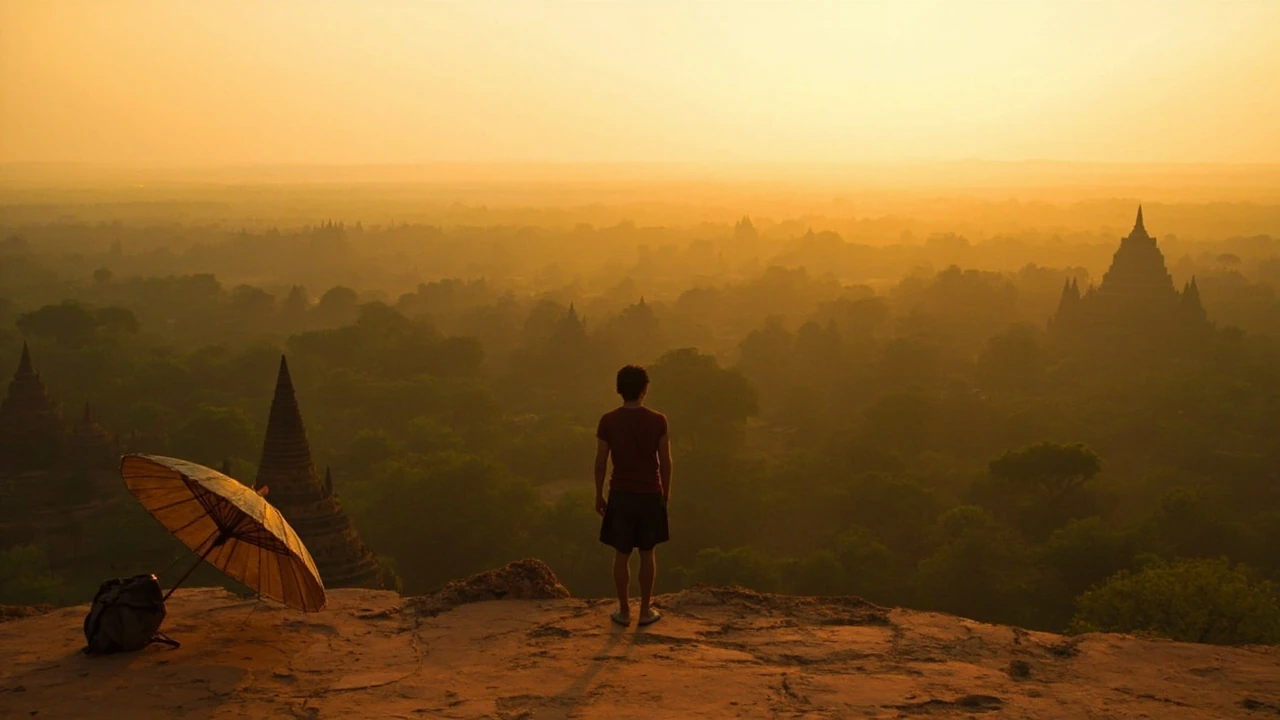
Myanmar rewards travelers who focus on a few places. The country combines Buddhist heritage sites, colonial-era urban architecture, river landscapes, mountain communities, tropical lowlands, and distinctive regional cuisines. Trying to cover Bagan, Mandalay, Yangon, Inle Lake, and the far northeast in one short trip can consume most of the journey in transit and increase exposure to unnecessary road or flight risk.
The right region depends on your priorities. Some travelers are drawn primarily by temples and historic architecture. Others want food, markets, or urban neighborhoods. Hiking, diving, rail journeys, and wildlife encounters lead to very different logistical questions. Use the table below as a starting point, not as a promise that every place is currently open or suitable for independent travel.
| Area | Main appeal | Travel considerations |
|---|---|---|
| Yangon | Food, markets, museums, colonial-era streets, and a large metropolitan setting | Confirm current local conditions, accommodation, and transportation; allow time for neighborhood variation |
| Mandalay and nearby Bagan | Living Buddhist culture, craft traditions, and major archaeological sites | Coordinate transfers carefully and avoid overloading a short stay with distant day trips |
| Inle Lake and the Shan region | Lake scenery, markets, craft communities, and slower inland travel | Confirm access, local transport options, and current guidance before committing to remote stays |
| Central and northern regions | History, landscapes, and less concentrated visitor infrastructure | Road conditions, permits, communications, and security may require specialist local knowledge |
| Coastal destinations | Beaches, islands, and marine environments | Seasonal weather, boat reliability, and regional restrictions require direct local verification |
A city base can be useful if you prefer easier meals, larger accommodation choices, and more transport connections. A small-town base may offer a calmer experience but can leave you dependent on a single driver or vehicle. Many travelers benefit from one major cultural destination plus a shorter stay nearby rather than a fast chain of well-known places.
- For a first visit focused on heritage, compare a few days in Yangon with a slower Bagan and Mandalay itinerary.
- For nature and rural landscapes, choose one lake, coastal area, or trekking region after verifying access and health considerations.
- For food and city life, devote more time to Yangon instead of adding distant destinations.
- For rail travel, treat the journey as part of the experience, but confirm that the service and your destination are operating as expected.
- For religious sites, allow time to observe visitor rules and dress expectations rather than treating them only as photo stops.
Travel season also affects the experience. Rainfall can reduce road reliability, alter waterfalls and lake activities, and make some rural routes less comfortable. The northeast has a cooler winter climate, while central and lower Myanmar can remain warm. Rather than relying on a generic “best time” chart, check conditions for the specific region and month you are considering.
Entry, transport, and money without relying on old advice
For additional context, Entry rules for Myanmar are subject to change and should be verified through official channels for the passport you hold. Do not assume that a US passport allows visa-free entry, and do not rely on an airline ticket, a travel blog, or a tour company as proof of admissibility. Confirm the required passport validity, blank-page requirements, visa category, permitted stay, arrival health rules, and any declared cash or payment requirements directly with the relevant authority.
Your passport should remain valid for longer than the planned itinerary, with unused pages if the destination requires them. Carry printed copies of your passport, visa, accommodation confirmations, and emergency contacts separately from the originals. Before each border crossing or remote transfer, verify whether your permit or visa covers that route. A general tourist authorization does not automatically mean that every region or activity is open.
Money and connectivity require more preparation than they do in many neighboring destinations. The kyat is the national currency, but the availability and reliability of foreign currency exchange, ATMs, card acceptance, and international payment services can vary. Carry enough local cash for the early part of the trip and additional reserves for disruptions, yet comply with official currency-declaration and legal-tender rules. Keep emergency funds in a second form so a lost wallet does not remove all access to money.
- Use official or reputable exchange channels and check the amount and documentation you receive.
- Withdraw cash in larger transactions when practical, but avoid carrying more cash than necessary.
- Keep a small emergency reserve separate from daily spending money.
- Download offline maps and translation resources before losing reliable connectivity.
- Ask your accommodation whether local SIM registration, charging, and internet service are currently available.
Transport options vary sharply by route. Major cities have airlines and road transport, while rural trips may depend on a driver, shared vehicle, boat, or locally arranged transfer. Verify the carrier, departure point, vehicle type, luggage allowance, and cancellation policy. A flight that appears on an aggregator may be a charter, a code-share, or a service with a seasonal schedule, so confirm details with the airline or a reputable local operator.
Health preparation belongs in the same category as entry and transport. Consult a travel medicine professional well before departure, discuss routine vaccines, destination-specific precautions, food and water safety, mosquito exposure, and any medical conditions relevant to the itinerary. Pack regular medications in original labeled containers and carry a clinician’s letter or prescription documentation where required. Travel insurance should cover the relevant medical care, but it does not replace sensible food, water, and injury precautions.
Culture, faith, and travel etiquette
Burma country culture is best approached with curiosity rather than an assumption that one visible tradition represents the whole country. Myanmar is home to many ethnic and linguistic communities, including Bamar, Shan, Karen, Kachin, Mon, Rakhine, Chin, and Kayah communities. Burmese is the main official language, while several regional languages are also spoken. A few phrases in Burmese may be useful, but travelers should avoid treating language as a simple marker of national unity.
Theravada Buddhism has a major place in public life, and religious buildings can be active places of worship rather than neutral attractions. At pagodas and monasteries, follow posted clothing rules, remove shoes where requested, avoid pointing feet toward Buddha images, and do not intrude on private prayers or ceremonies. Loud conversations, climbing on sacred structures, or treating worshippers as scenery can cause offense.
Public behavior also varies by location. Keep your voice low in religious spaces, dress more conservatively than you would at a beach resort, and ask before photographing people. Hand gestures, the meaning of colors, and reactions to public affection may not match American expectations. If a cultural practice feels unfamiliar, observe first and avoid imposing a judgment during the encounter.
Food offers a practical way to understand regional differences. Rice, fish, soups, curry dishes, fermented foods, tea, and sweets appear across the country, but ingredients and names change by region and ethnic community. Food hygiene varies with the kitchen and its handling practices rather than simply with a country label. Choose busy establishments with visible cooking, drink treated or sealed water where appropriate, and ask your accommodation about reliable medical care.
For readers interested in how another destination communicates identity through culture and everyday life, the site’s guides to Laos people and their regional diversity and what is Mexico known for beyond familiar landmarks offer useful comparative context. The same principle applies in Myanmar: major monuments and famous dishes are only the starting point.
Responsible travel and regional respect
Responsible travel in Myanmar has an extra layer because tourism money can interact directly with communities affected by displacement, militarization, poverty, or restricted movement. A responsible traveler does not treat local hardship as an attraction or assume that visiting automatically helps. Questions about who operates a business, where products come from, how employees are treated, and whether a route respects community restrictions can be more informative than a generic “eco-friendly” label.
- Support locally owned lodging, guides, restaurants, and transport where that is practical and safe.
- Ask before photographing religious ceremonies, ceremonies in progress, remote communities, or vulnerable individuals.
- Use reputable animal-welfare standards and avoid wildlife encounters that involve direct contact, coercion, or captivity.
- Carry out your own waste and reusable-water practices instead of assuming every destination has reliable recycling.
- Report illegal wildlife products only through appropriate authorities or reputable organizations rather than displaying them for photographs.
- Respect local guidance about restricted areas, photography, religious behavior, and public demonstrations.
Do not purchase antiques, artifacts, or wildlife products without understanding whether the item was legally exported and ethically sourced. Research can involve confiscation, criminal accusations, or delays, particularly when provenance is unclear. If an item carries a suspicious history or the seller becomes evasive, walk away.
Language and behavior can also reduce friction. Learn the names of towns and regions correctly, avoid calling all Burmese-speaking communities “Burmese” when a more precise term is appropriate, and do not assume every citizen supports the same political position. Politically sensitive conversations should be handled with care in public places. Keep your own profile offline if discussing local politics or security matters with people you have just met.
Environmental impact deserves attention as well. Inland travel may involve long road distances, while island and coastal trips can place pressure on limited freshwater, waste-management, and marine resources. Avoid damaging coral, buying shells or coral, feeding wildlife, or entering protected sites without permission. Choose activities with transparent rules about access, group size, and local benefit.
A practical pre-trip checklist for the Burma country
A solid Burma country itinerary is a coordinated plan rather than a collection of attractions. Start with the decision about where you can responsibly travel, then build transport and lodging around that decision. Independent travel may work for some routes, but an experienced local operator can be valuable in places where permits, checkpoints, regional contacts, or transport changes matter.
- Choose one or two regions that match your interests and the time available.
- Read the current government advisory for each region and note any stated restrictions.
- Verify passport, visa, permit, and arrival requirements for your exact nationality.
- Confirm flights, road transfers, rail services, boats, and accommodation through direct providers.
- Ask a local specialist to review the route for access, road conditions, and current restrictions.
- Arrange travel insurance after checking exclusions for unrest, war zones, medical evacuation, and particular activities.
- Visit a travel medicine clinic and prepare medications, repellent, water treatment, and first-aid supplies.
- Carry lawful local currency, a backup payment method, offline documents, and a device with emergency contact details.
- Save offline maps, copies of bookings, diplomatic contact information, and emergency numbers on paper.
- Recheck conditions shortly before departure and keep enough flexibility to change the plan.
A simple information packet should be available to a trusted person at home. Include your flight details, accommodation addresses, insurer contact information, planned activities, and the date by which you expect to check in. Some travelers also carry copies of key documents in a password-protected digital folder. The objective is not to create fear but to make a delayed flight, road closure, lost phone, or medical issue less disruptive.
On the ground, keep your schedule realistic. Allow time for changing weather, traffic, local holidays, and slower-than-expected border or checkpoint procedures. Do not schedule a remote excursion and an international flight on the same day without a workable buffer. A missed connection caused by an overloaded itinerary can become a much larger problem than the destination itself.
Finally, decide in advance which changes would make you leave. A confirmed road closure, an official no-go designation, a medical limitation, or a change in local security should trigger a new plan rather than an attempt to solve the problem informally. This decision-making framework is part of the Burma country experience: good travel planning gives you more freedom to enjoy what remains accessible because you do not depend on every planned stop going perfectly.
Frequently asked questions
Is Burma the same country as Myanmar?
Yes. Myanmar is the country’s official English name, and Burma is an older and still widely used name. Travelers may encounter both on maps, tickets, official documents, and websites. Search using both terms when confirming transportation or accommodation, and compare the actual destination rather than assuming the spellings represent different places.
What is the safest part of Myanmar for tourists?
There is no single answer that remains current enough to publish without checking official guidance. Security varies by region and can change after local incidents. Review current travel advisories, confirm access with reputable local operators, and evaluate the proposed route rather than selecting a destination solely because it appears on a general list of popular places.
Do US citizens need a visa to visit Burma country?
Do not assume visa-free entry or rely on an old answer. Requirements can depend on passport validity, purpose of travel, and current rules. Check the relevant official Myanmar immigration authority or an accredited consular source for the latest requirements, and verify them again shortly before departure.
Can tourists travel independently in Myanmar?
Independence may be practical for travelers staying in major cities and using established transport routes, but it becomes more complicated where permits, checkpoints, road conditions, and local access rules matter. A reputable local operator can reduce logistical uncertainty. Ask who is responsible for permits, vehicle checks, backups, and communication if a planned route becomes unavailable.
Is cash necessary in Myanmar?
Yes, travelers should be prepared to use cash. Availability of ATMs, exchange services, card acceptance, and international payment networks can vary, and interruptions are possible. Use lawful exchange channels, carry a prudent reserve, and keep emergency funds separate from the money used for daily purchases. Follow current official currency rules.
What documents should I carry for emergency travel?
Carry your original passport and any required visa or permit, plus printed copies of essential reservations and emergency contacts. Keep copies of your passport and insurance details in a secure location separate from the originals. Download tickets and maps for offline use because connectivity can be unreliable.
How should travelers behave at Buddhist temples in Myanmar?
Treat temples as active religious sites. Follow clothing and footwear instructions, keep your voice low, avoid disrupting worship, and ask before photographing ceremonies or people. Do not climb on sacred structures or point your feet toward Buddha images. Learn the rules at each site rather than assuming every religious site follows identical procedures.
How much time should I spend in Myanmar?
Most travelers benefit from more time than a fast itinerary allows because road transfers, local holidays, weather, and changing conditions can affect schedules. At least several days in one region is more useful than brief stops across distant cities for many visitors. Choose the duration according to your priorities, transport connections, health, and tolerance for a flexible schedule.
Can I visit the Rohingya area of Rakhine State?
Access and travel conditions in Rakhine State require especially current scrutiny. Conflict, displacement, military activity, and entry restrictions have made the region a sensitive area, and general tourism information may be incomplete. Do not attempt to enter on the basis of an old itinerary or tourist recommendation; consult current official guidance and obtain local professional advice before making any plan.