Landmarks in Poland worth planning around
Choosing the right landmarks in Poland can determine whether a first trip feels like a collection of famous photographs or a coherent journey through centuries of history. Warsaw, Kraków, and Gdańsk each deserve time on their own, while Malbork, Auschwitz-Birkenau, Wieliczka, and the smaller historic towns reveal a country with layers far beyond the obvious itinerary.
The strongest approach is to select two or three anchor cities, then add no more than three day trips. Trying to collect every major sight in one week creates long transfers and leaves little time for the places themselves. A better plan reserves mornings for outdoor sites, afternoons for museums and old towns, and one flexible period for weather, fatigue, or a place that deserves more time than expected.
Start with Kraków if you want royal history, medieval architecture, and major museums in a compact center. Choose Warsaw for modern history, monumental architecture, and a capital shaped by reconstruction. Gdańsk works best for Hanseatic streets, maritime history, and a strong connection to northern Europe. If your interest is castles or wartime memory, add Malbork or Auschwitz-Birkenau. For underground architecture and unusual religious spaces, Wieliczka Salt Mine offers an experience unlike Poland’s more familiar palace and church visits.
This guide explains what each important destination offers, how to group places without wasting travel time, and which practical details deserve attention before tickets, transport, and accommodation are arranged. It focuses on established landmarks rather than a ranked checklist of every attraction in the country.
Major landmarks by city and region
Poland’s best-known sites are spread across distinct geographic areas. Kraków and Warsaw deserve separate blocks of time, while Gdańsk and the Baltic coast sit far to the north. Malbork and Auschwitz-Birkenau are logical day trips from different hubs, and southern Poland offers both mountain scenery and the unusual underground landscape of Wieliczka.
| Destination | Principal landmarks | Best for | Planning consideration |
|---|---|---|---|
| Kraków | Wawel Hill, Wawel Cathedral, Cloth Hall, Florian Gate, Barbican, Kazimierz, Auschwitz-Birkenau | Royal history, Gothic and Renaissance architecture, major museums | Reserve concentrated time for Wawel and the Old Town rather than trying to walk every attraction in one day |
| Warsaw | Royal Castle, Old Town, POLIN Museum, Warsaw Rising Museum, Palace of Culture and Science, Wilanów Palace | Modern Polish history, reconstruction, palaces, museum visits | The capital covers a large area, so group sites by neighborhood and use transit or taxis between distant stops |
| Gdańsk | Main Town, St. Mary’s Church, European Solidarity Centre, Mariacka Street, shipyard area | Maritime history, colorful architecture, Solidarity movement | Walk distances vary because the center includes steep and uneven streets |
| Malbork | Malbork Castle | Medieval fortifications, Teutonic history, architecture | Plan a substantial visit because the complex is much larger than a single castle building |
| Central Poland | Wieliczka Salt Mine, Warsaw, Łódź | Underground heritage, museums, industrial and cultural history | Advance booking is often useful for the salt mine, particularly during busy travel periods |
| Southern Poland | Zakopane, Jasło, Ojców National Park, Tatra foothills | Mountains, wooden architecture, outdoor scenery | Weather can change quickly in the mountains; leave room for conditions rather than fixing every hour in advance |
For a first visit, a useful shortlist includes the following twelve places:
- Wawel Castle and Cathedral for Poland’s royal and religious history in Kraków.
- The Cloth Hall, Florian Gate, and Barbican for Kraków’s market square and medieval defenses.
- Auschwitz-Birkenau for an essential and demanding account of the Holocaust.
- Wieliczka Salt Mine for chapels, chambers, and underground mining history.
- The Royal Castle and Old Town for Warsaw’s reconstructed historic center.
- The POLIN Museum for Poland’s modern history and changing national identity.
- Warsaw Rising Museum for the experience of civilians and fighters during the 1944 uprising.
- Wilanów Palace for late Baroque architecture and royal life outside the capital center.
- Gdańsk Main Town for Hanseatic architecture and the city’s maritime setting.
- The European Solidarity Centre for modern history in a former shipyard complex.
- Malbork Castle for its scale, defensive walls, and medieval history.
- Zakopane and the Tatra landscape for travelers who want mountains and outdoor time in addition to cities.
Not every traveler needs all twelve. Families often get more value from Kraków, Warsaw, and Gdańsk, while history specialists may replace a city day with Malbork or a smaller heritage site. The goal is a route that leaves enough time for each place.
Why Kraków is the easiest place to begin
Kraków offers the most concentrated introduction to Poland’s major landmarks because royal, religious, medieval, and modern cultural sites sit within a walkable historic center. Wawel Hill alone anchors several important experiences. Wawel Castle began as a royal residence in the 13th century and now presents the history of Poland’s monarchy through collections and exhibitions. Wawel Cathedral, consecrated in 1364, occupies a prominent position on the hill and reflects centuries of royal and religious importance.
Across the Vistula River, the Main Market Square provides a very different setting. The Cloth Hall was first opened in the 14th century, underwent a Renaissance renovation in the 16th century, and received the arcades visible today in the 19th century. Its ground floor still functions as a market, while upper galleries contain art collections. A stroll around the square brings medieval urban form, commercial history, street performance, cafés, and restaurant terraces into one compact space.
At the northern edge of the Old Town, the Barbican and Florian Gate illustrate the city’s former defensive system. The circular Barbikan was constructed around the end of the 15th century, with especially thick brick walls and defensive turrets. Florian Gate, built around the late 13th century, once formed part of a larger wall system. Visiting both allows the fortifications to make sense as connected structures rather than isolated photo stops.
A general overview of historic places in Poland is useful for checking the broader historical context before choosing which sites deserve a closer visit. Kraków’s advantage is that many of its best-known places can be experienced in a single walk, yet each requires time for details that a quick photo would miss.
Allow at least two full days in Kraków. Use one for Wawel Hill and the western Old Town, another for the Main Market Square, Kazimierz, and a museum. Add Auschwitz-Birkenau as a separate, emotionally demanding day rather than attaching it to a rushed afternoon. The concentration camp and memorial require respectful attention, and a compressed schedule is not an effective way to understand the site.
Kazimierz adds another layer to the city. Its streets reflect a long Jewish history, and the district includes synagogues, museums, restaurants, and contemporary cultural spaces. For travelers focused on food, Kazimierz is also one of Kraków’s most rewarding areas for regional dishes and a gradual evening walk, although the best-known restaurant corridors can become busy. A daytime visit offers a better balance between architecture, museums, and quieter side streets.
Warsaw’s landmarks show a modern country, not only a royal one
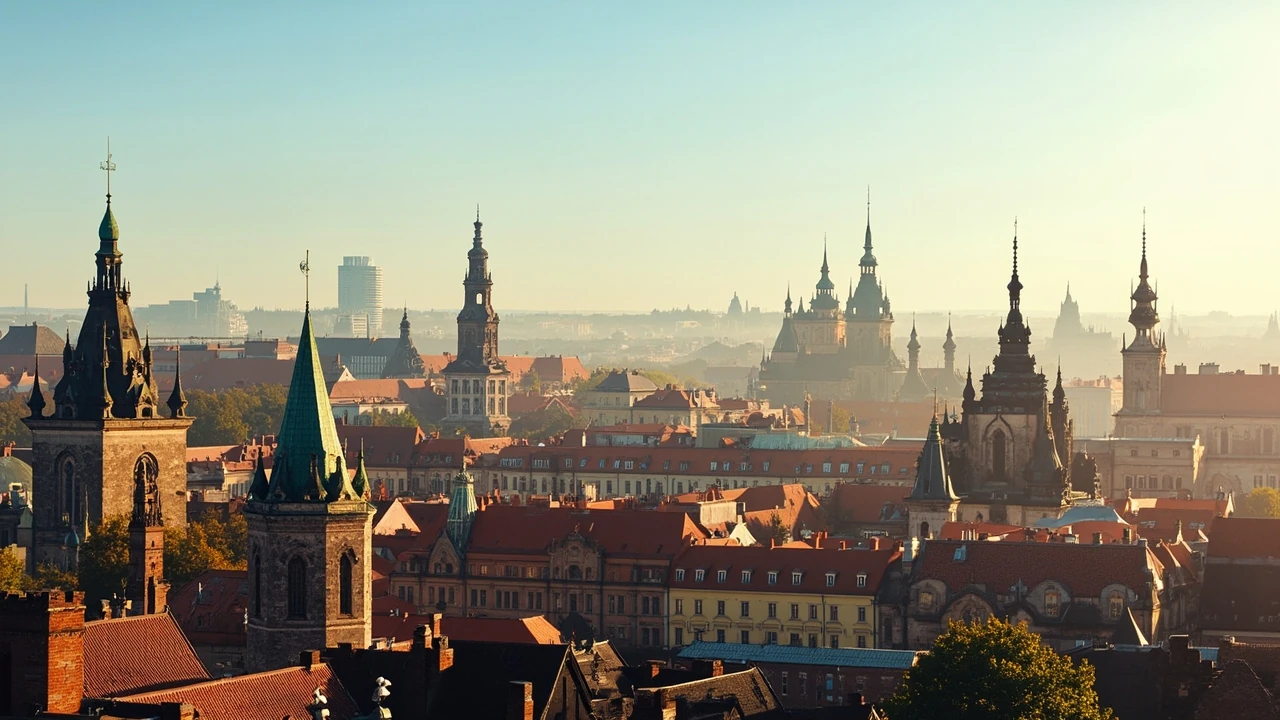
Warsaw is often introduced through its skyline and the Palace of Culture and Science, but its most revealing sites also include the reconstructed Old Town, the Royal Castle, and museums devoted to recent Polish history. The city was heavily damaged during the Second World War and rebuilt afterward. That history gives its famous postwar architecture and carefully restored center a specific context.
The Old Town sits near the Royal Castle and contains reconstructed or restored historic buildings, including St. John’s Archcathedral and the Barbican. Entering it from the direction of the Vistula River allows the view to unfold gradually: towers and rooflines appear first, followed by the market square and castle. This is a good way to understand how the district relates to the river and surrounding city rather than treating it as an isolated theme park.
The POLIN Museum of the History of Polish Jews and the Warsaw Rising Museum address different but connected aspects of the capital’s past. The first focuses on Jewish life, coexistence, exclusion, and survival in Polish territory over many centuries. The second presents the experiences of residents during the Warsaw Uprising of August 1944, including the final weeks of fighting and the destruction of the city. Both are emotionally substantial visits, and either can justify several hours.
Wilanów Palace provides a quieter royal experience outside the dense center. The late 17th-century Baroque residence was built for King Jan III Sobieski and combines Polish architectural traditions with influences from other parts of Europe. Its setting is part of the attraction, so travelers who want only palace interiors may find it less immediately dramatic than Wawel. Those interested in gardens, royal domestic life, and a slower suburban pace usually find the contrast worthwhile.
The Palace of Culture and Science remains one of Warsaw’s most recognizable modern landmarks. Visitors can approach it from the central rail station or see it across the city from different viewpoints. An observation deck is one option for understanding its scale, but the building is also worth encountering in the context of the surrounding postwar city. That contrast helps explain why it remains visually controversial while serving as an important part of everyday Warsaw.
| Warsaw area | Landmarks to pair | Suggested time |
|---|---|---|
| Old Town and Castle | Royal Castle, St. John’s Archcathedral, Barbican, Old Town lanes | Half a day to a full day depending on museum interests |
| New Town and riverfront | Barbican, Vistula boulevards, Copernicus monument | Two to three hours |
| Praga | Contemporary art spaces, independent shops, historic tenements, Port Praski area | An afternoon or evening |
| Wola and central Warsaw | POLIN Museum, Palace of Culture and Science | A full day if including both museums and neighborhoods |
| Wilanów | Wilanów Palace and grounds | Half a day |
Do not plan Warsaw and Kraków as interchangeable stops. Kraków rewards slow walking through dense layers of old architecture; Warsaw often works better with a mix of historic districts, modern landmarks, and museum time. At least three days gives Warsaw enough space for both character and context.
Gdańsk and the northern coast reveal a maritime Poland
Gdańsk looks toward the Baltic Sea and the Hanseatic trading world, giving it a noticeably different atmosphere from inland Poland. The historic center contains brick Gothic houses, narrow lanes, elaborate facades, and a large market area. Reconstruction also plays a role because the center was damaged during the Second World War. Its present appearance combines restored architecture, traces of conflict, and a strong modern identity.
St. Mary’s Church is one of the defining landmarks of Main Town. Its massive brick body and tall tower can be seen from multiple parts of the city, which makes it a useful orientation point. Mariacka Street is known for its historic houses and atmospheric relationship with the river, while the Golden Gate, Artus Court, and Long Market create a walk through the old trading center.
The European Solidarity Centre occupies part of the former Gdańsk Shipyard. Its connection to Lech Wałęsa and the Solidarity movement makes it essential for anyone interested in the series of events that contributed to the end of communist rule in Poland and, more broadly, Central Europe. The exhibition space is modern and large, so allow more time than a quick museum visit. In warmer months, the surrounding district encourages walking, but waterfront and shipyard areas are exposed to weather.
Malbork Castle is the major excursion from Gdańsk for travelers with an interest in medieval architecture. Built by the Teutonic Knights in the 13th century, the complex includes thick defensive walls, multiple castle sections, a palace, and a monastery. It was once among the largest and most important fortified complexes in medieval Europe. The scale is the point: visitors should allow enough time to understand the relationship between the defensive perimeter, inner buildings, and later changes rather than searching for one photogenic façade.
For a northern itinerary, two days in Gdańsk and one day for Malbork creates a balanced trip. Add Sopot if coastal scenery and time near the sea are priorities, or Oliwa if gardens and a different urban district appeal more. Avoid trying to reach these places from Kraków on an ambitious day trip; the transfer uses time that could be spent exploring Gdańsk properly.
Northern Poland also has smaller historic towns, including Toruń, whose old town preserves medieval street patterns and is closely associated with Nicolaus Copernicus. Such towns are valuable not only for their individual buildings but also for the way medieval commerce, religion, and civic life can be understood on a manageable scale. They are often a better choice for a relaxed day than racing between distant headline attractions.
Beyond the headline cities: Auschwitz, Wieliczka, and the south
Poland’s major historical landmarks extend well beyond Warsaw, Kraków, and Gdańsk. Auschwitz-Birkenau, Wieliczka Salt Mine, the medieval towns, and the southern mountain region each provide a different reason to travel. Adding one of these destinations can make a Polish itinerary more varied than a sequence of large cities.
Auschwitz-Birkenau near Oświęcim is a memorial and museum complex created by the Nazi camp system and later dedicated to remembering its victims. It is not an attraction in the usual entertainment sense. Visitor areas can be emotionally demanding, and the scale of the site means that a short stop does not provide an adequate understanding of what happened there. Travel arrangements should leave enough time for the visit itself without making the schedule excessively complicated beforehand.
Wieliczka Salt Mine, southeast of Kraków, contains underground passages, chambers, lakes, and historic chapels carved in salt. The mine was used continuously for more than 900 years before commercial mining stopped in 1996. Its lower level is accessible by a staircase, while the route through the upper workings reveals both extraction methods and the religious spaces created by miners. Comfortable footwear is more useful than a generic sightseeing outfit because the surface can be uneven and the temperature differs from Kraków.
Southern Poland works well for travelers who want scenery and slower travel. Zakopane is a base for the Tatras and is known for its distinctive highland architecture. The surrounding landscape supports walking in good conditions, but weather, elevation, and transport can affect how far visitors can go. It is better to choose a few trails or viewpoints and check current mountain information than to fill an itinerary with distant destinations that depend on perfect conditions.
Ojców National Park, near Kraków, offers forest, limestone formations, and a castle setting on a smaller scale. Łódź, meanwhile, is useful for visitors interested in textile history, cinema, and Polish modern culture rather than medieval monuments. These alternatives show why “Poland” cannot be reduced to castles and old town squares.
- For World War II and Holocaust history: allow Auschwitz-Birkenau the full attention it demands, then consider Warsaw’s POLIN Museum and Warsaw Rising Museum.
- For medieval history: combine Kraków’s fortifications with Malbork Castle and a smaller historic town such as Toruń.
- For art and royal collections: prioritize Wawel, the Warsaw Royal Castle, Wilanów, and Kraków’s art galleries.
- For nature and slower travel: use Zakopane or the southern countryside as a base instead of treating the mountains as a brief scenic stop.
- For maritime history: give Gdańsk at least two full days, including the Solidarity Centre and the historic center.
Which landmarks fit your travel style?
The most useful landmark list depends on what you want to learn, how much history you already know, and how much time you have. Comparing by interest makes it easier to avoid a trip that consists only of the country’s best-known names.
| Travel priority | Strongest matches | Why it works | Possible limitation |
|---|---|---|---|
| Architecture | Wawel, Kraków Old Town, Wilanów, Malbork, Gdańsk Main Town | Covers Gothic, Renaissance, Baroque, and brick Gothic traditions | Styles overlap, so a guide or focused route adds context |
| History | Auschwitz-Birkenau, POLIN Museum, Warsaw Rising Museum, European Solidarity Centre | Addresses occupation, resistance, Jewish life, and post-communist change | Several museums overlap thematically, so allow time rather than rushing |
| Families | Wawel, Kraków Old Town, Wieliczka, Gdańsk shipyard area | Offers castles, stories, underground spaces, and maritime heritage | Keep each day focused and avoid overloading children with museum stops |
| Photography | Kraków at different times, Warsaw skyline, Gdańsk lanes, Malbork | Contrasts medieval detail, modern architecture, and broad fortifications | Popular viewpoints can be crowded; early or late light helps |
| Food and city life | Kraków Main Square, Kazimierz, Warsaw Praga, Gdańsk waterfront | Connects landmarks with markets, cafés, restaurants, and local streets | Peak dining hours can be busy, so reserve or shift the schedule |
| Outdoors | Zakopane, Tatra foothills, Ojców, Baltic coast | Adds landscapes and physical activity to a heritage-heavy trip | Weather and seasonal conditions require flexibility |
For a first trip, two cities and two day trips often provide a better balance than five cities. A model two-week itinerary might look like this:
- Days 1–3: Kraków for Wawel Hill, the Old Town, Kazimierz, and a major museum.
- Day 4: Auschwitz-Birkenau, with a deliberately unhurried visit and a simple return journey.
- Day 5: Wieliczka Salt Mine, either as a focused day or alongside a less demanding nearby stop.
- Day 6: Warsaw transfer, followed by an evening walk around a compact section of the center.
- Days 7–8: Warsaw for the Royal Castle, Old Town, POLIN Museum, and Warsaw Rising Museum.
- Day 9: Wilanów Palace and a relaxed southern or central Warsaw neighborhood.
- Day 10: Warsaw to Gdańsk, with time for the Main Town in the evening if the train schedule supports it.
- Days 11–12: Gdańsk for the historic center, European Solidarity Centre, and waterfront.
- Day 13: Malbork Castle, returning to Gdańsk or continuing north according to onward travel.
- Day 14: flexible day for a museum, weather, shopping, or a place missed earlier.
This is a framework, not a fixed timetable. A two-week trip does not need to use every day in this way. Reduce the list if you have ten days, add a mountain base if weather and interest favor hiking, or replace one urban museum block with a smaller town.
Getting between the landmarks without losing time
Transport is one of the largest practical differences between Polish cities. Distances look short on a map because Poland is geographically compact, yet rail journeys, station transfers, and local travel can consume several hours. The best route is not always the one with the fewest kilometers.
| Journey | Practical approach | Main consideration |
|---|---|---|
| Kraków to Auschwitz-Birkenau | Organized transport or a combination of rail and local connection | Allow a full day and build in time for the memorial visit itself |
| Kraków to Wieliczka | Rail or organized day excursion | Check the visit format and route in advance; reserve entry when needed |
| Kraków to Warsaw | Intercity train, usually the most practical city-to-city option | Compare the total journey time rather than only the advertised travel duration |
| Warsaw to Gdańsk | Direct train when available | Reserve ahead for busy periods and confirm the station-to-center route |
| Gdańsk to Malbork | Regional train or organized excursion | The castle requires a full visit, so avoid a rushed connection |
| Warsaw sightseeing within the city | Walk for central districts, then transit or taxi for distant sites | Traffic can make a short road distance slow |
Buy train tickets before travel where possible, especially for intercity routes and dates that may sell out. Keep an offline copy of reservations and confirm platform information on the day because assignments can change. For sites such as Wieliczka, Auschwitz-Birkenau, Wawel, and the European Solidarity Centre, check the official site for current admission arrangements, timed-entry rules, accessibility information, and temporary closures before leaving your accommodation.
Arrival time also matters. International trains may arrive late, and a missed connection can disrupt an entire day. Avoid placing a tightly timed museum visit immediately after a long international journey. If a delayed flight or rail booking is involved, put one flexible sightseeing block near the beginning or end of the trip rather than in the middle.
Within Kraków, Warsaw, and Gdańsk, walking reveals more than a checklist of interiors. Old Town lanes, courtyards, river paths, and side neighborhoods often provide a clearer sense of place. Comfortable shoes matter, especially in Gdańsk and at large castle complexes. Public transit is useful for longer crossings, but it can consume time when a walk would take less.
Pack layers rather than one outfit for every day. Historic interiors can feel cool, while uncovered monuments and the Baltic coast become uncomfortable in wind or rain. Sturdy footwear serves Kraków’s cobbles, Malbork’s extensive grounds, and mountain paths better than dress shoes. In religious buildings, covered shoulders and appropriate behavior matter; signs and staff instructions should always take precedence.
Use a slower pace for history-heavy destinations
Poland’s most affecting sites require different rhythms. Auschwitz-Birkenau should not be rushed, squeezed between unrelated stops, or treated as a brief photo stop. Wieliczka rewards attention to the route, the geology, and the miners’ chapels. Wawel and Wilanów require more than a quick look at a facade. The Warsaw and Gdańsk museums are substantial enough to demand their own blocks of time.
Begin major museums early in the day when attention is fresh and the space is usually calmer. Take notes or use an audio guide so that details remain available after the visit. At Auschwitz-Birkenau, follow the route carefully and allow for the emotional weight of the place. At Warsaw Rising Museum, the recreated street environment and multimedia presentation work best when visitors can absorb details instead of rushing toward the next attraction.
Travelers often underestimate how much distance sits between landmark clusters. Kraków’s Wawel Hill and Main Market Square are close, but Auschwitz-Birkenau requires a separate excursion. Warsaw’s Wilanów Palace is not conveniently next to the POLIN Museum. Gdańsk’s European Solidarity Centre lies south of the old center, and Malbork is another journey north. A map with realistic local travel times is more useful than a list of sights placed in an arbitrary order.
Seasonal demand also affects availability. Summer brings longer daylight and more outdoor activity, but Warsaw, Kraków, and the Baltic coast can be busy. Spring and autumn often provide comfortable sightseeing weather, while winter offers a quieter atmosphere and a different view of cities lit after dark. Mountain conditions can restrict access or make trails unsuitable, even when nearby valleys remain clear.
A respectful itinerary leaves space for the less dramatic parts of Poland too. Neighborhood walks, independent galleries, local cafés, parks, and smaller churches often reveal contemporary life rather than repeating the official postcard view. They also make a better fit for travelers who have already seen Poland’s most photographed monuments.
Frequently asked questions
What are the most famous landmarks in Poland?
The most famous include Wawel Castle and Wawel Cathedral in Kraków, the Kraków Cloth Hall and Florian Gate, Warsaw’s Palace of Culture and Science, the Royal Castle and Old Town, Gdańsk Main Town and St. Mary’s Church, Malbork Castle, and Auschwitz-Birkenau. The best choice depends on whether you prioritize royal history, architecture, modern history, or scenery.
Which Polish city is best for a first visit?
Kraków is the easiest starting point because Wawel Hill, the Old Town, major museums, and the Cloth Hall are concentrated in a compact area. Warsaw offers more modern Polish history and a capital-city experience, while Gdańsk is strongest for maritime history and northern European atmosphere. With several days, use Kraków as the primary base and add one other city.
How many days are needed to visit Poland’s major landmarks?
A one-week trip can cover Kraków, Warsaw, and one focused day trip such as Auschwitz-Birkenau or Wieliczka. Two weeks allow a more balanced itinerary that also includes Gdańsk, Malbork, and one or two slower days. Trying to add all three major cities and multiple distant excursions in one week creates too much transit time.
Is Auschwitz-Birkenau worth visiting?
Auschwitz-Birkenau is essential for anyone seeking to understand the Holocaust and the history of Nazi occupation. It is also emotionally demanding. Visitors should reserve a substantial block of time, follow the site’s respectful guidance, and avoid treating the visit as a casual tourist excursion or a brief stop between longer journeys.
Can Wieliczka Salt Mine be visited in one day from Kraków?
Yes. Wieliczka is a practical day trip from Kraków and works well as a focused itinerary rather than an added stop during an already busy day. The underground route includes stairs and uneven surfaces, so comfortable footwear matters. Confirm the current visit format, entry arrangements, and transport connection before going.
Is Malbork Castle worth a day trip from Gdańsk?
For travelers interested in castles, medieval defense, or Teutonic history, yes. The complex is extensive and contains several major parts of the fortified settlement, so the visit can take most of a day. It is easier to reach from Gdańsk than from Kraków, making it a natural part of a northern itinerary.
What is the best time of year to visit Poland’s landmarks?
Spring and autumn generally suit sightseeing because temperatures are often moderate and outdoor walking is comfortable. Summer provides long days but attracts more visitors to major cities. Winter is quieter and can be rewarding, although cold weather affects comfort and some mountain routes. Choose the season according to the sites you value, then keep one flexible day for weather.
Do I need to visit both Kraków and Warsaw?
For a first trip, yes, if you have roughly ten days or more. Kraków presents a dense medieval and royal center, while Warsaw reveals reconstruction, modern architecture, and twentieth-century history. With less time, combining them can lead to a rushed trip. In that case, choosing Warsaw with one focused excursion is usually more satisfying than rushing between both.
How should I plan an Auschwitz-Birkenau and Wieliczka trip?
Do not treat them as interchangeable stops. Auschwitz requires an emotionally focused day, while Wieliczka can work well as a shorter excursion from Kraków. If both are priorities, give each its own scheduled day or place one around a less demanding activity. Confirm current admission rules and avoid building a route with unreliable connections between them.
Are Poland’s historic city centers suitable for travelers with limited mobility?
Many central streets are walkable but uneven, and major sites often include stairs, courtyards, or long museum routes. Kraków, Gdańsk, and Malbork require particular attention because of cobbles and extensive grounds. Warsaw’s main landmarks are generally spread across broader areas, making transport important. Check each site’s official accessibility information and request assistance when needed rather than assuming every venue has the same facilities.